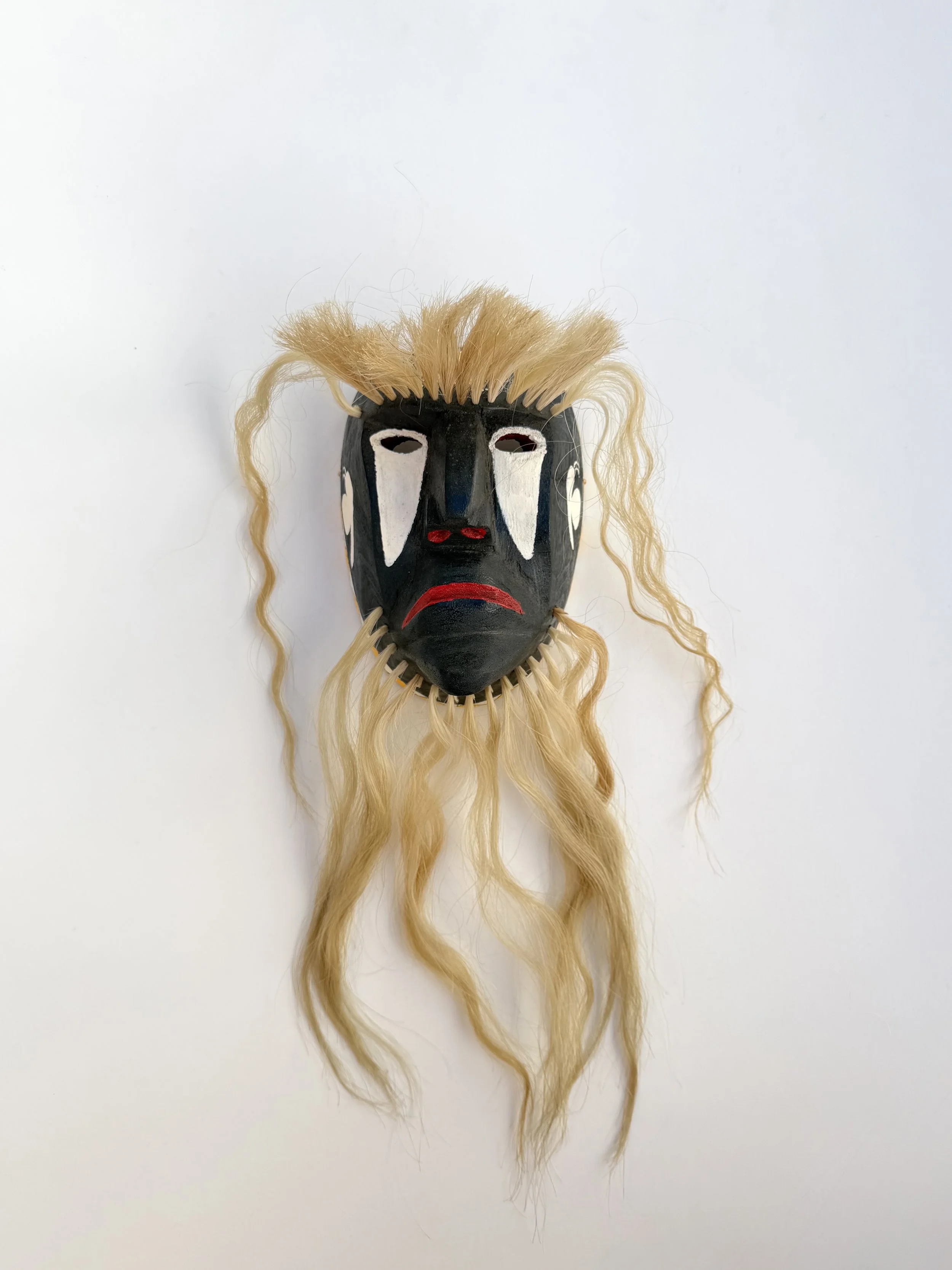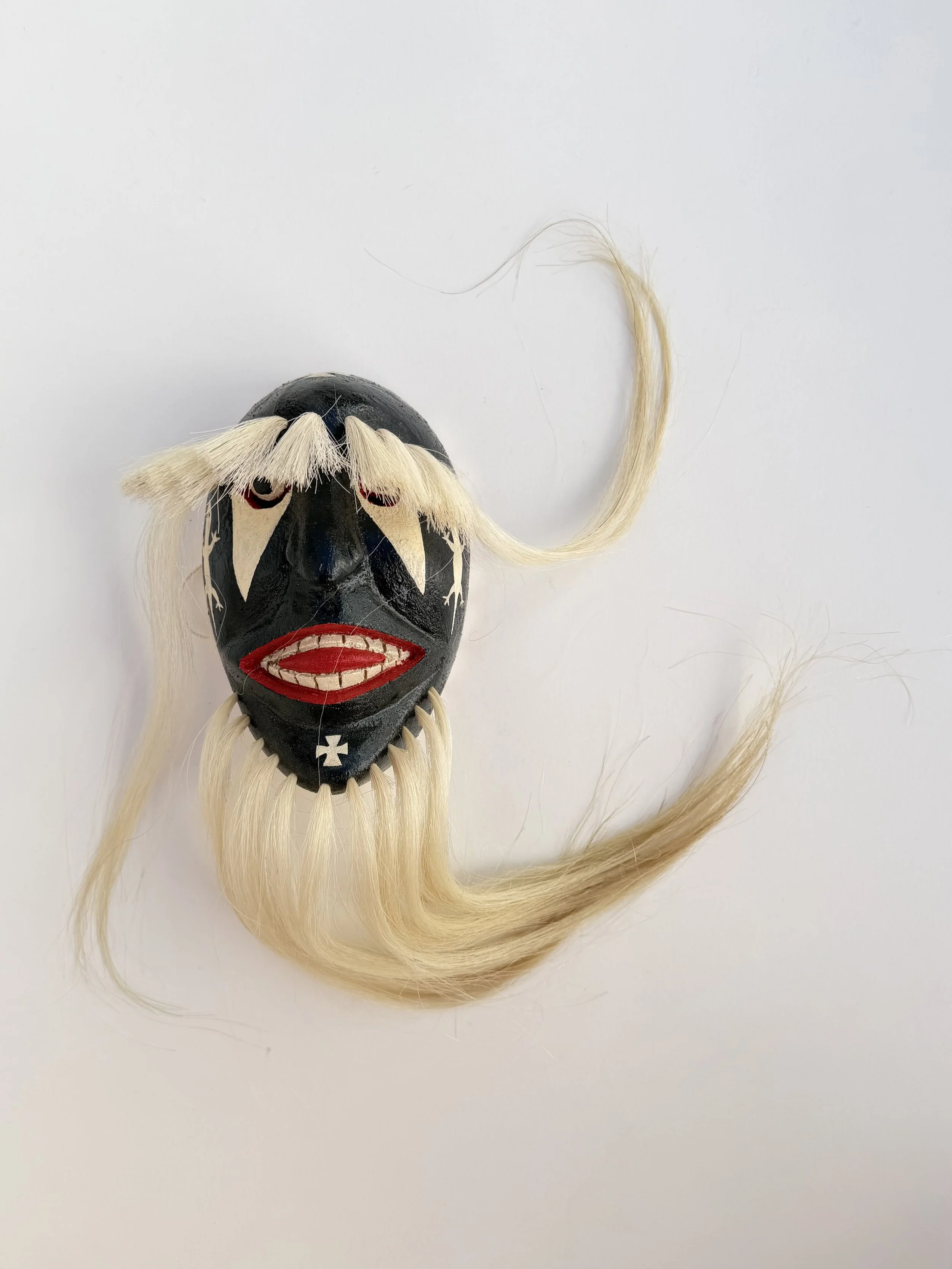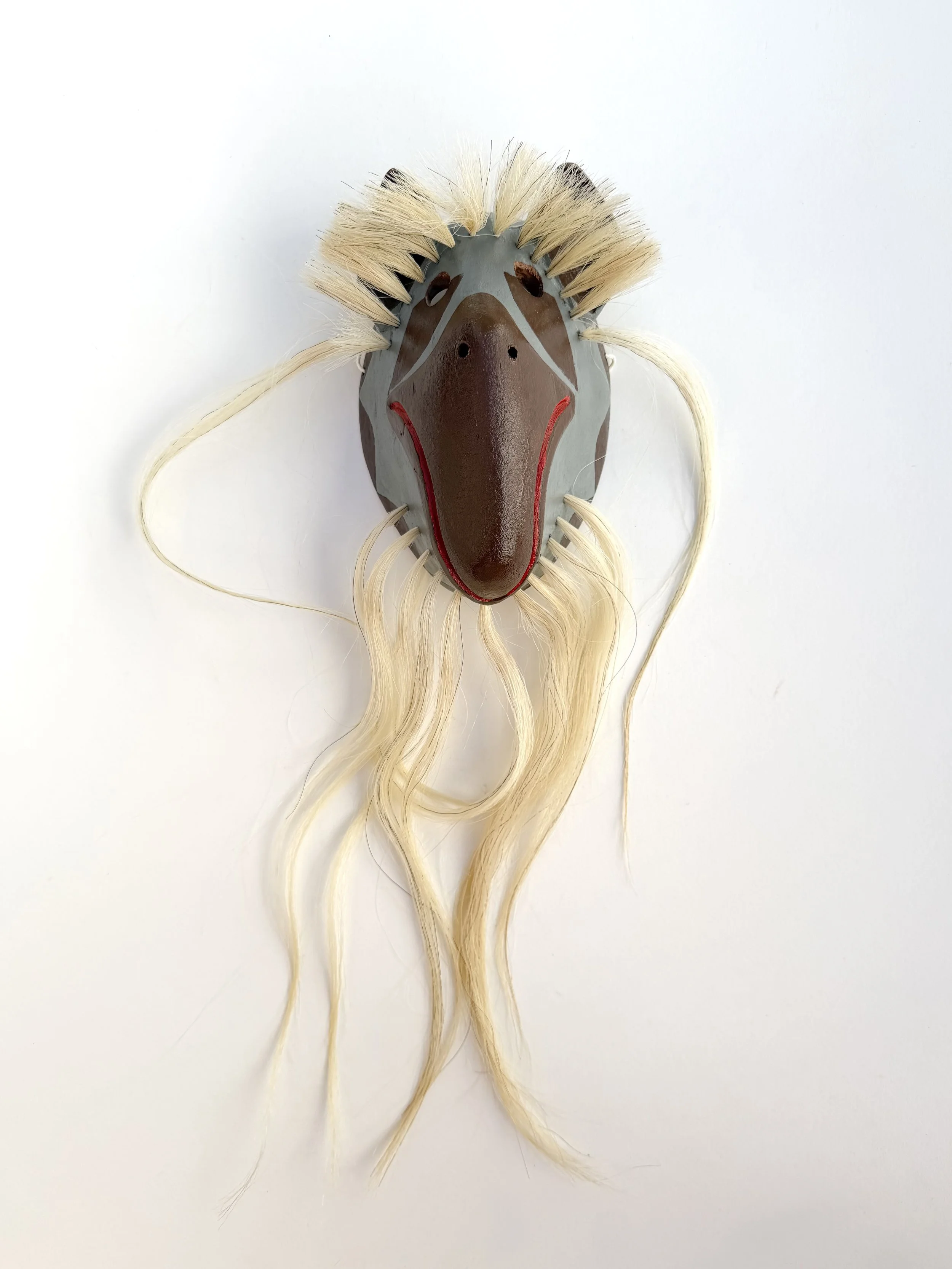
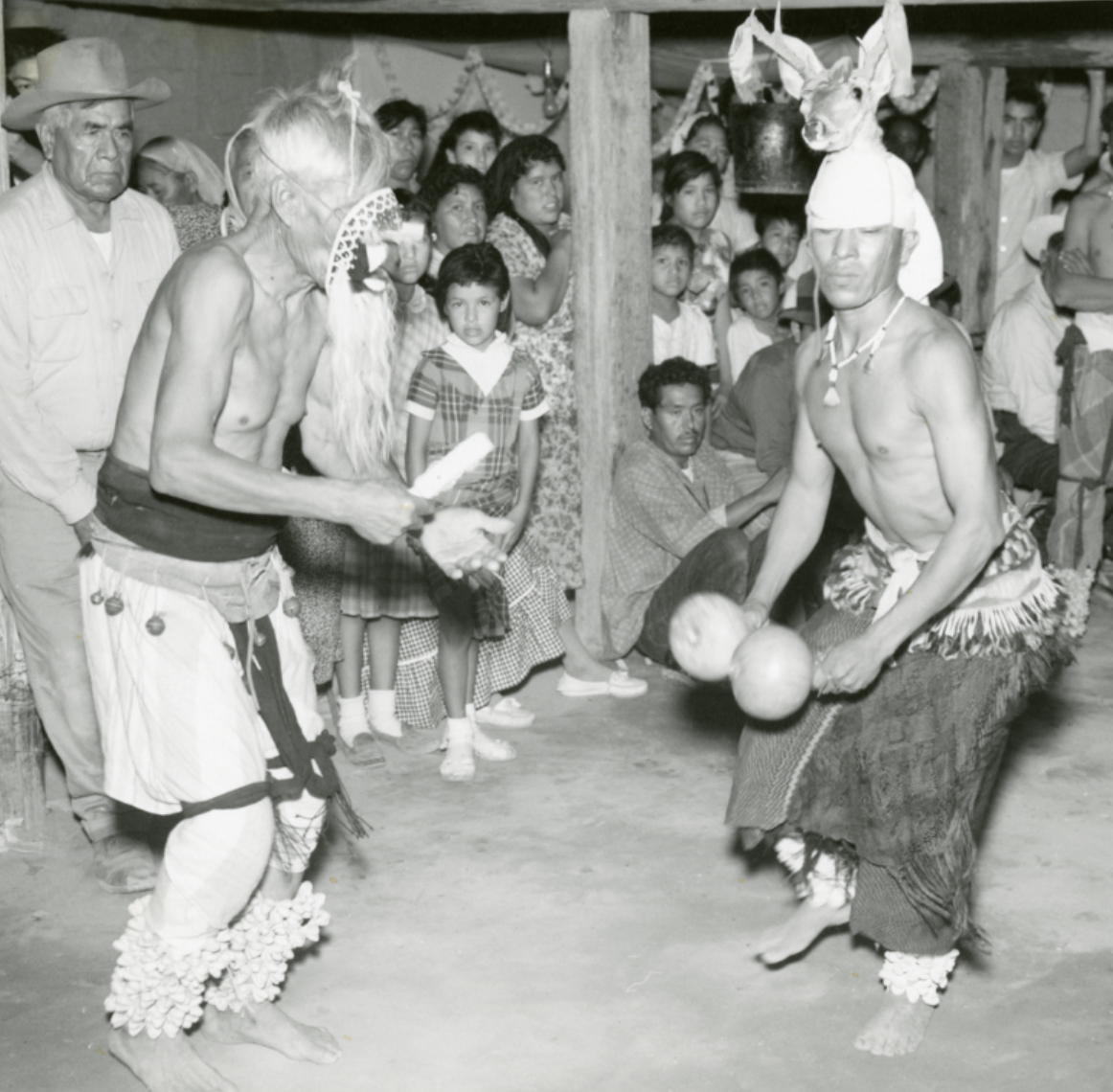
The Pahkola (also spelled pascola) dancers appear during most major ceremonies in the villages and are regarded as the Old Men or hosts of the Fiesta.
The masks are carved from soft wood such as cottonwood, with tufts of horsehair above the eyes and under the mouth. Masks representing humans or goats are the most common, but coyotes, javelinas, and roosters have also been portrayed by pahkola carvers.
The masks below came from a private collection in Tucson are a well documented, with e artists name, village and the year it was carved or acquired. Written documentation comes with each and an example of that documentation is below.
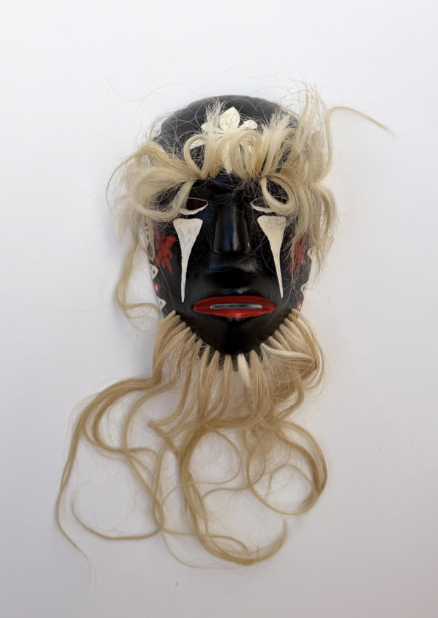
#1
This mask was carved by Juan Rosas de Vican of Pueblo, Sonora, of cottonwood root. Juan is a member of the Yaqui tribe of northwestern Mexico. He carved this mask in 1990.
The Yaqui Indians have lived in the Mexican state of Sonora for thousands of years and call themselves the Yoeme (“the People”). The plural form is Yoemem. The Mayo Indians, who live in southern Sonora, northern Sinaloa, and small settlements in Durango, speak a nearly identical language and also call themselves the Yoreme.
(The Yaqui and Mayo languages are closely related and belong to the Cahita branch of the Uto-Aztecan language family.)