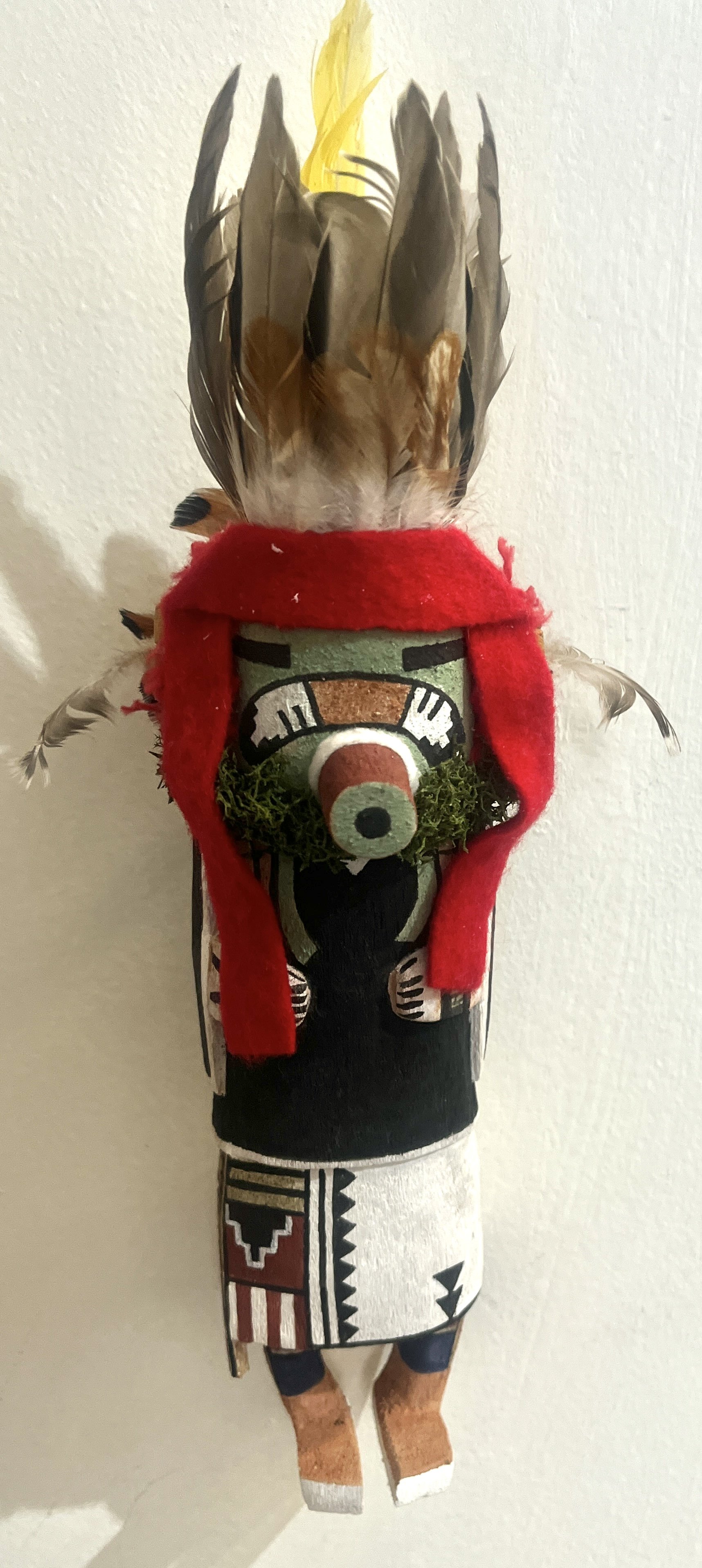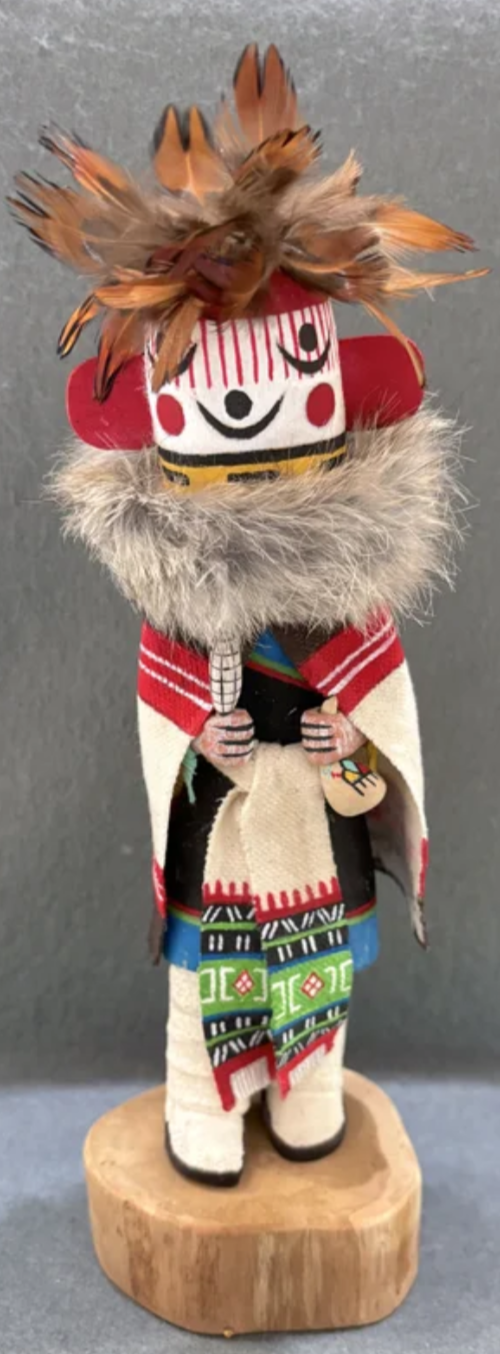
Katsinas are spirit beings who are the intermediaries between the Hopi and their deities, carrying the prayers of the Hopis for the continuation of the cycle of life of all living things. They may represent the spirit of plants, animals, forces of natures, places or even other tribes. Some are known for their duties (eg: guard, clown...) and not all names are translatable. They appear in the plazas for Hopi villages for approximately 6 months of the year as they dwell in the katsina or spirit world for the other half of the year.
They are carved from the root of the cottonwood tree - used because the cottonwood grows only where there is an ample and consistent supply of water - rare around the Hopi mesas - and because of the water-seeking nature of the roots, which can grow out and down a couple hundred feet or more in search of the water table. If you are interested in learning more, visit our website
www.hopikatsina.com
Between our Santa Fe and Tucson stores we have somewhere between 400 and 500 katsinas so on our website we can only hope to show you a cross-section. Please contact us if you are looking for something specific that you do not see. We may have it or be able to acquire it for you
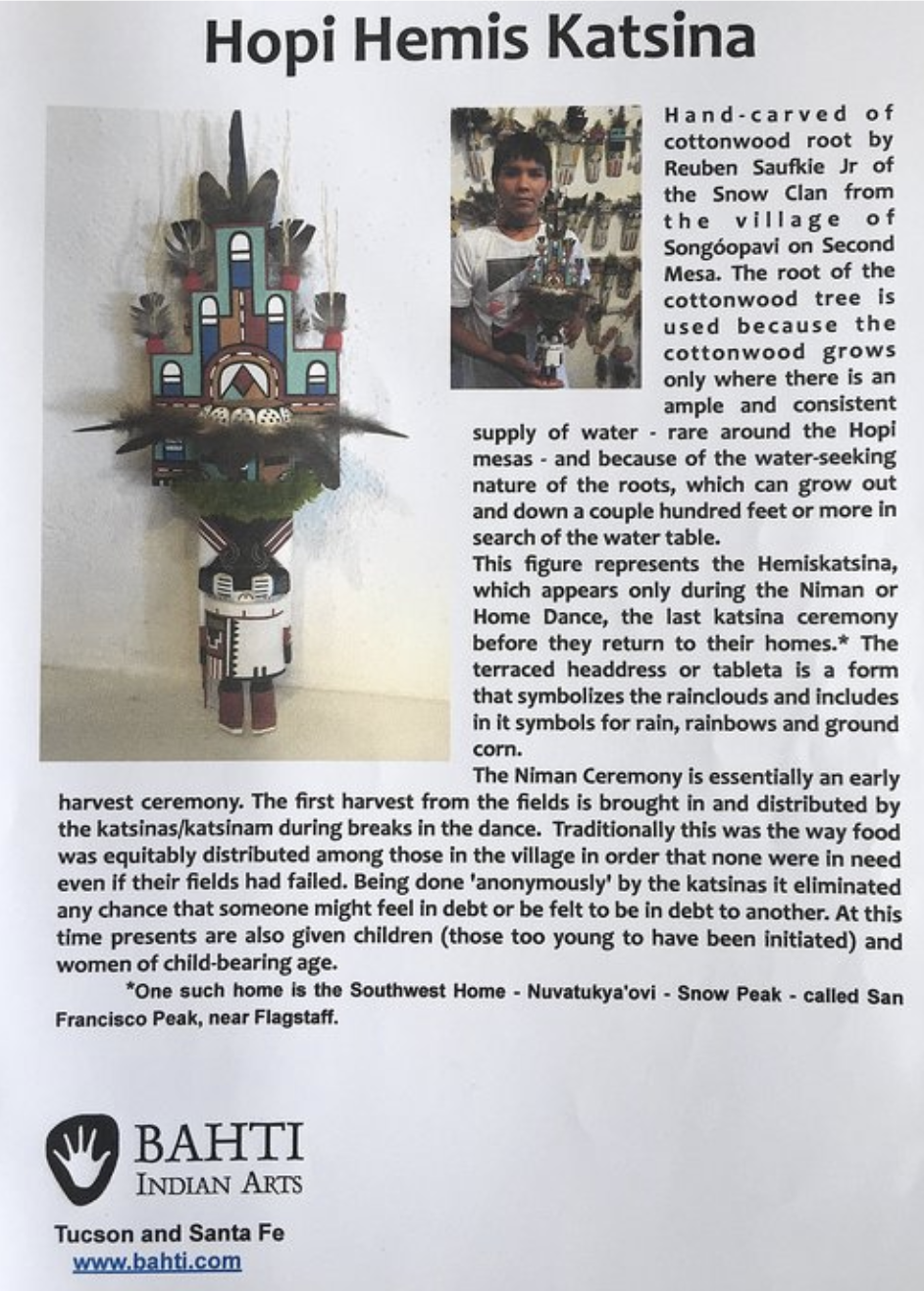
For each katsina we sell, we provide an information sheet similar to the ones above. (the Hemis katsina above has been sold)


A book on the Hopi by a Hopi. Currently out of print but you can find copies online. Secakuku provides greater context for the katsinas with insight from the Hopi point of view.

A great book. It profiles nearly 2 dozen Hopi katsina carvers - past and present. $16.95 Paperback.
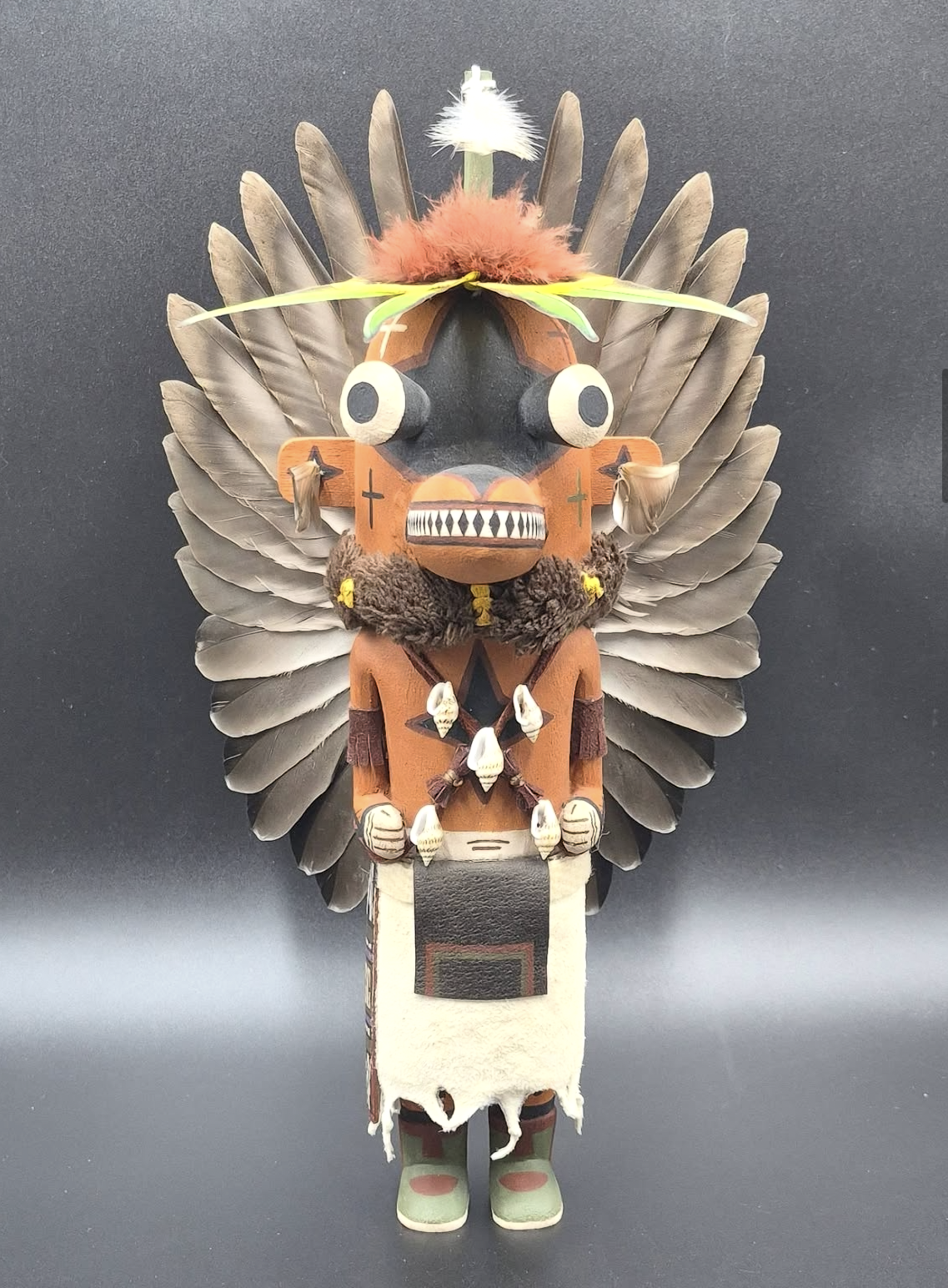
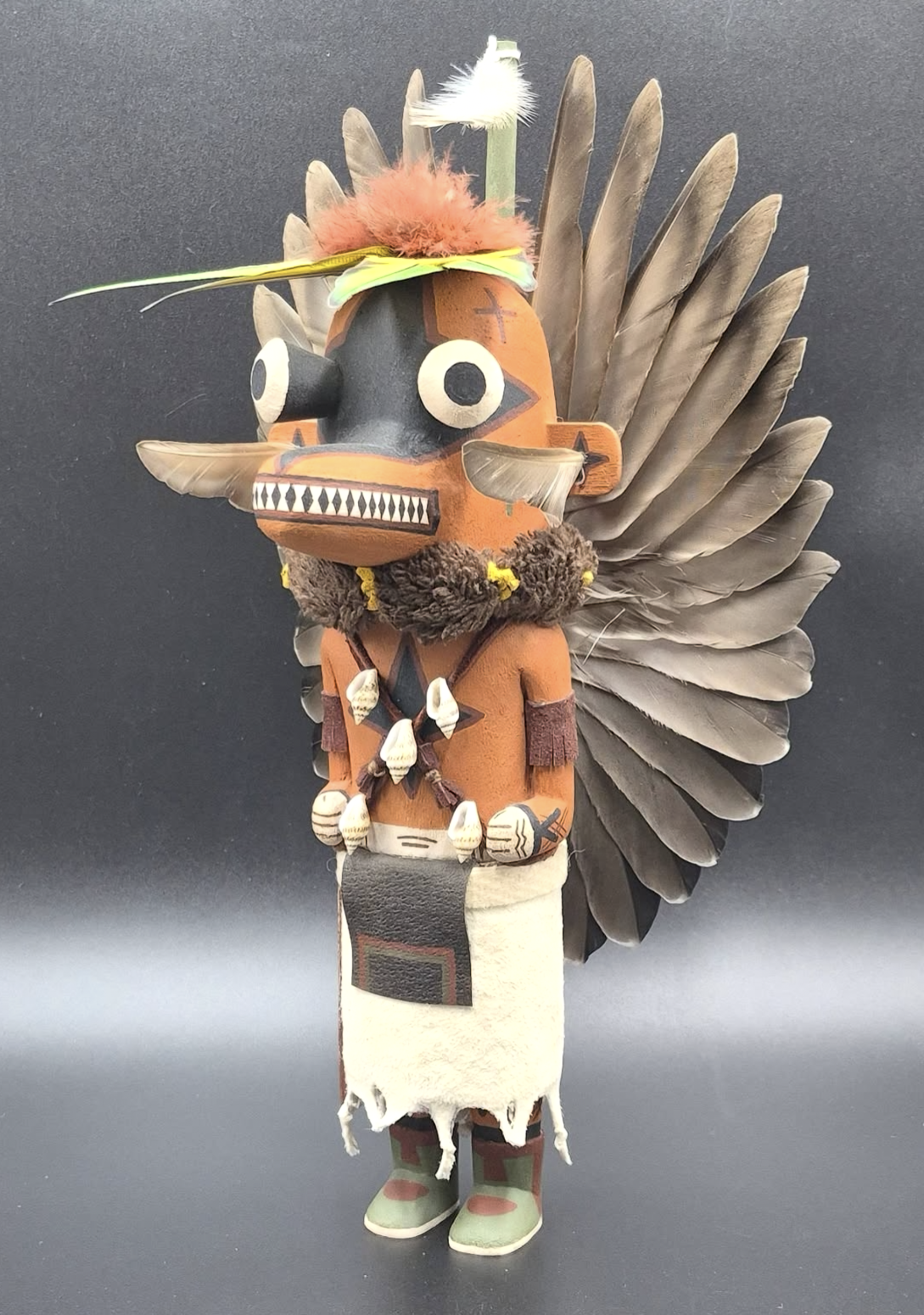
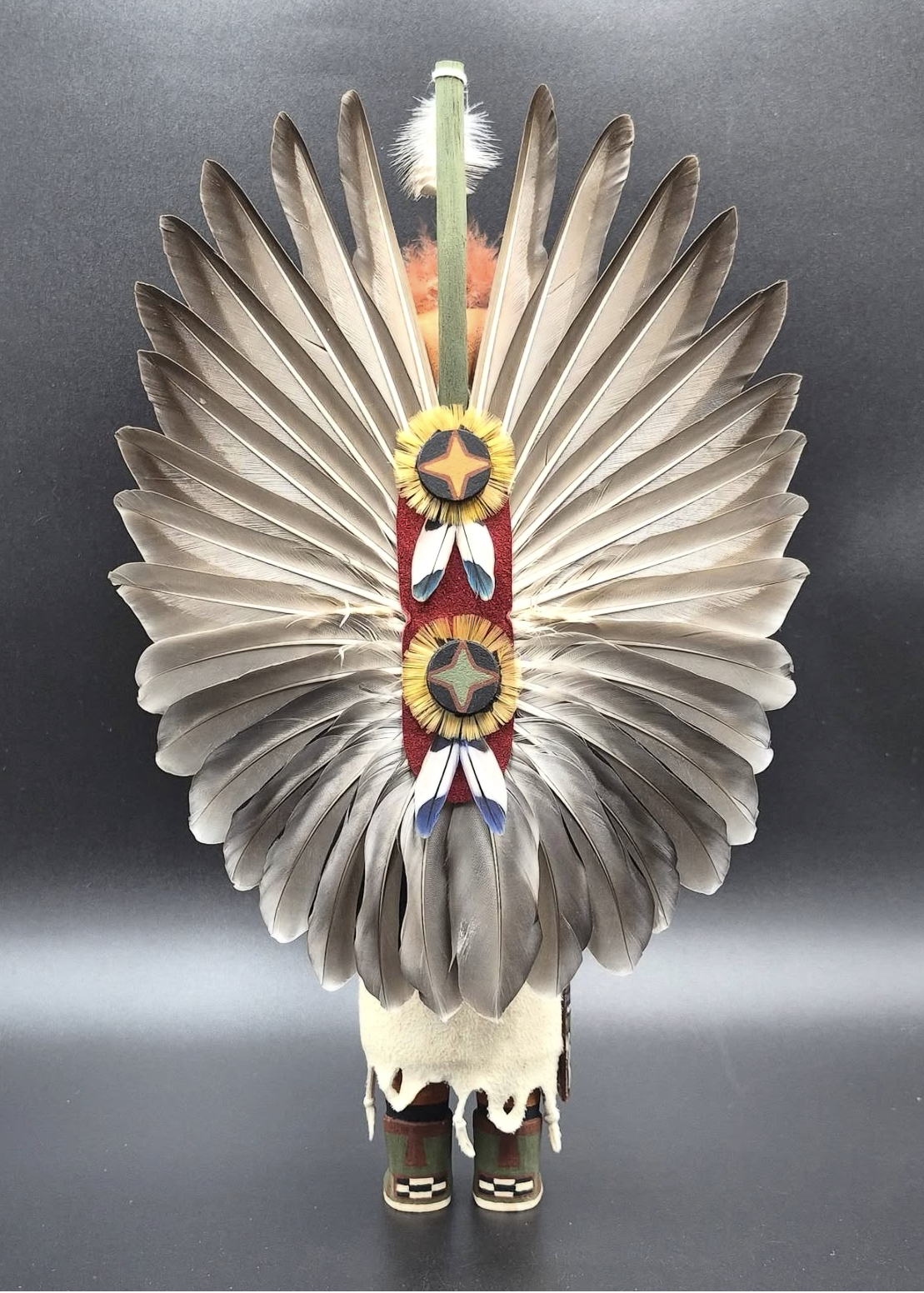
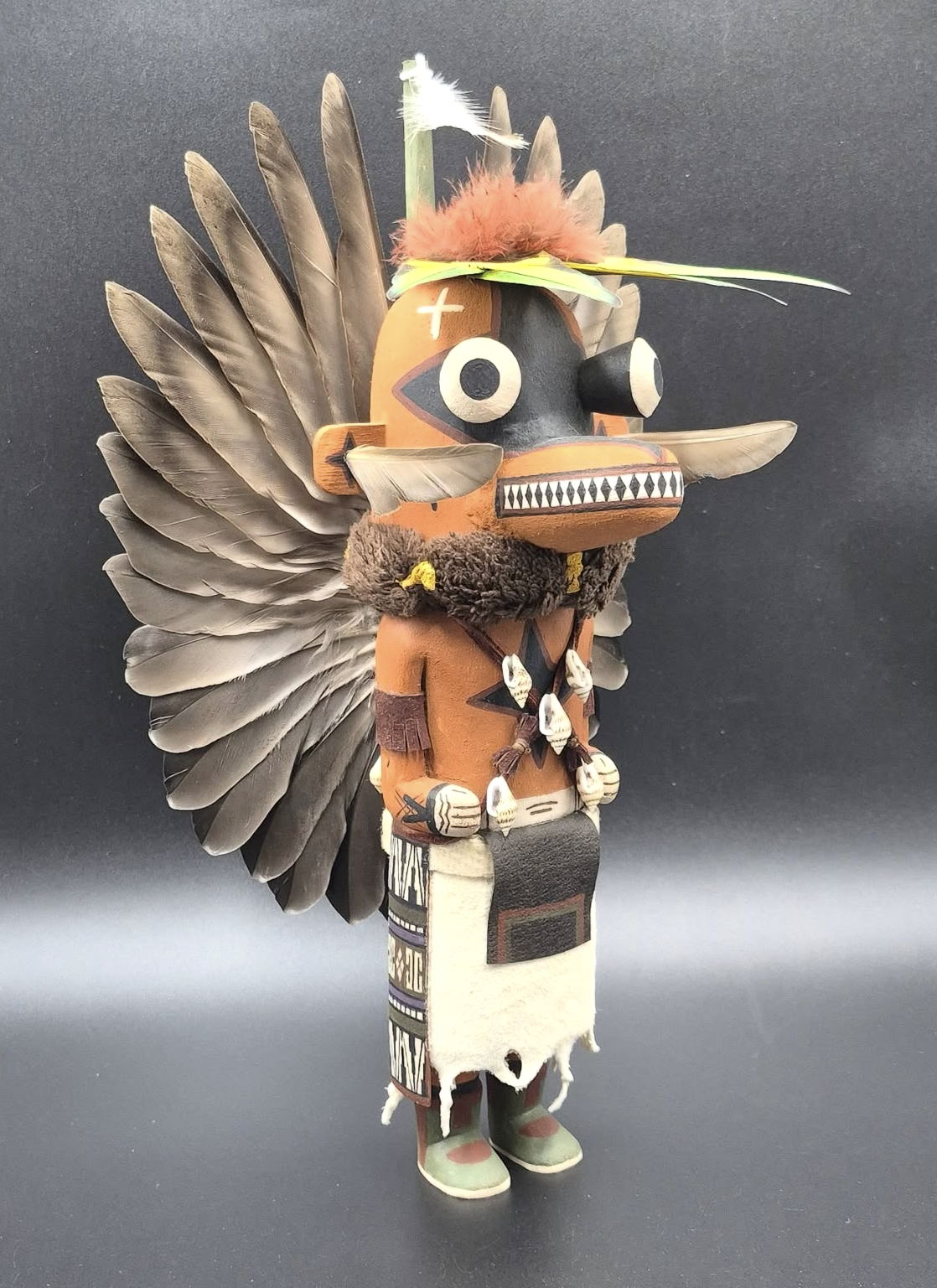
By Tayron Polequaptewa, a breath-taking Sikya Nangösohut or Yellow Chasing Star katsina. This one is 12.75 inches high and his feathers span 7.25 inches wide. $1600. (SANTA FE)
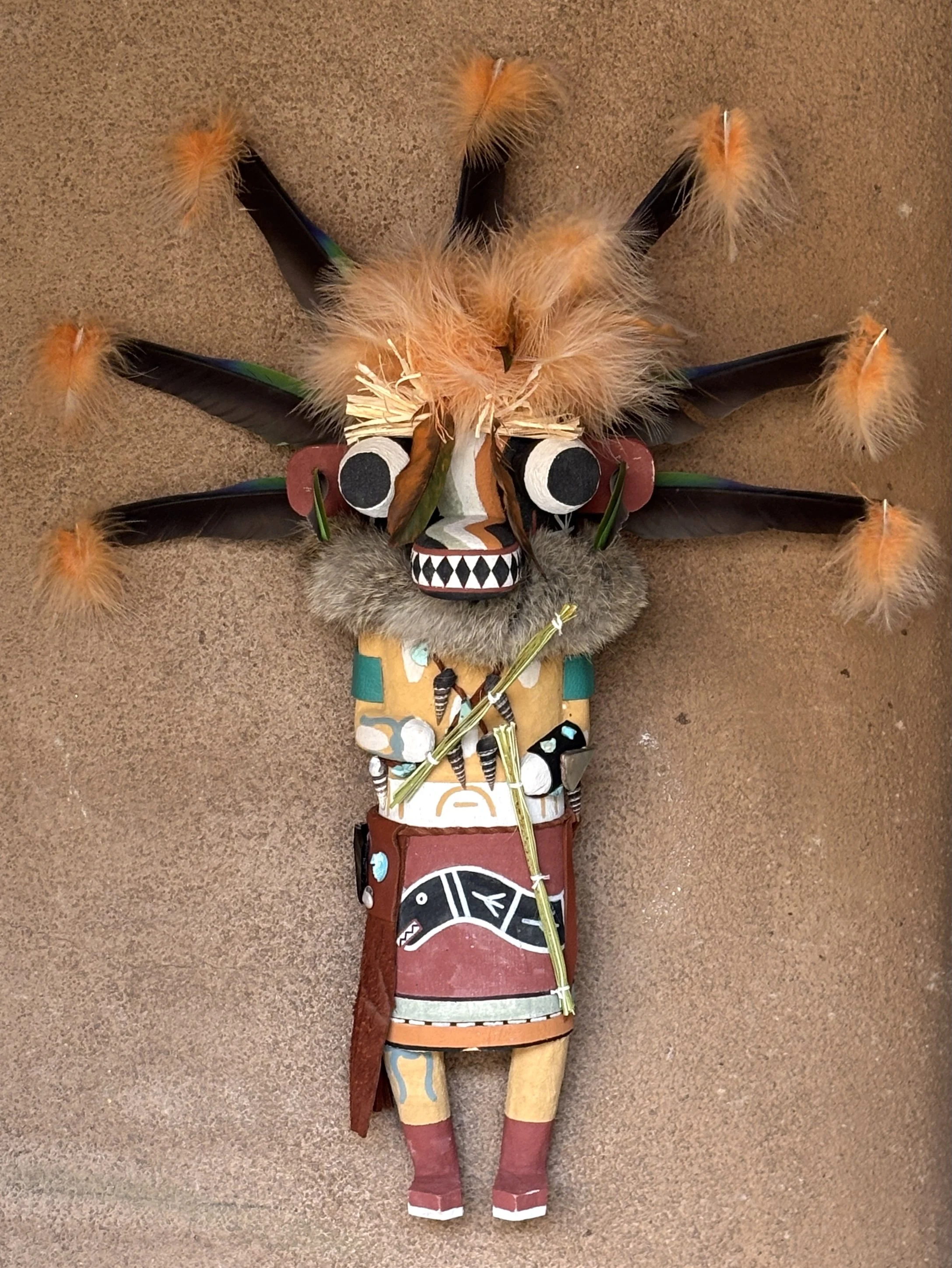
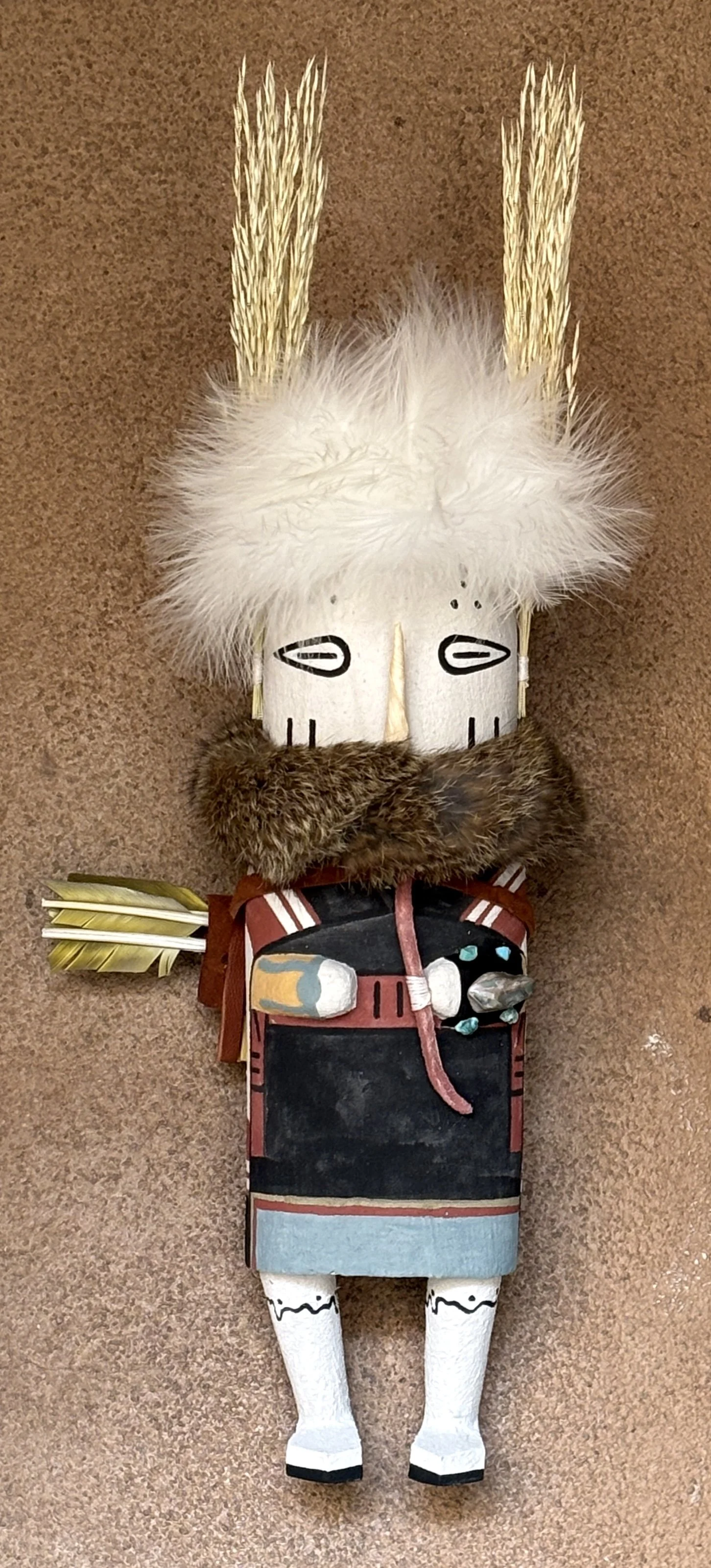
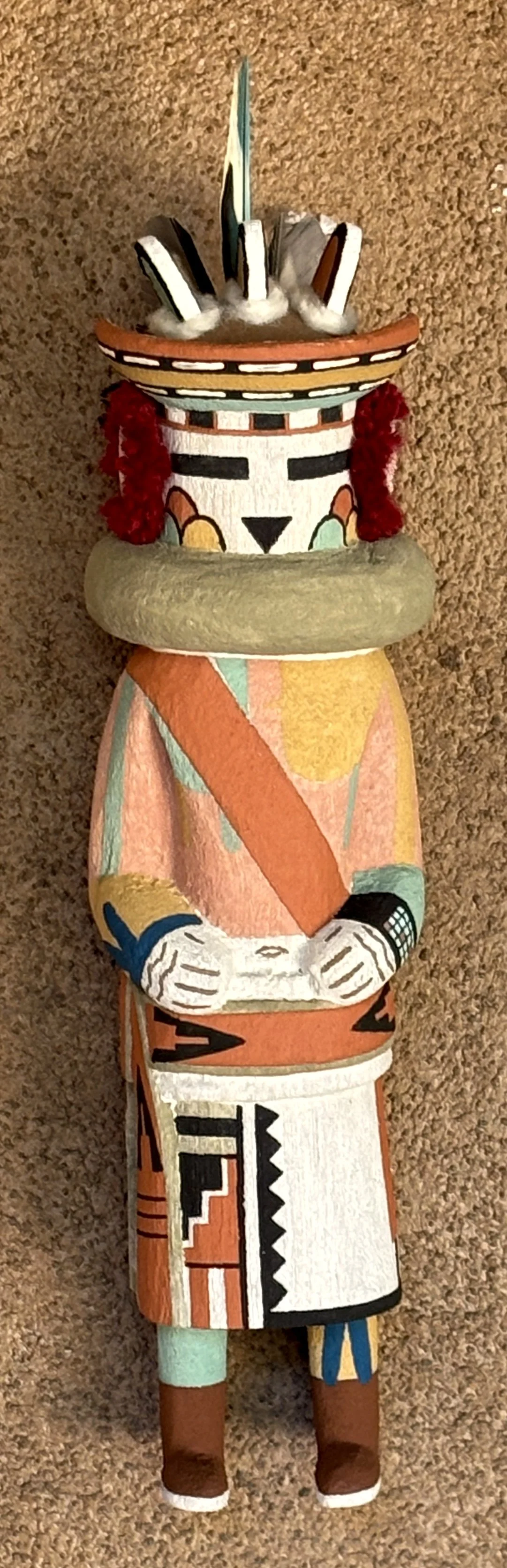
The first two dolls in the row above were carved by Sean Macias. A Soongwuqa or Milky Way katsina, 20.5 inches high and $600. A Söhönasomtaqa, 16.5 inches high and $600. An Omaw or Cloud katsina by Hongvi Marquez. 10 inches high to feather tip and $350. (ALL in SANTA FE)
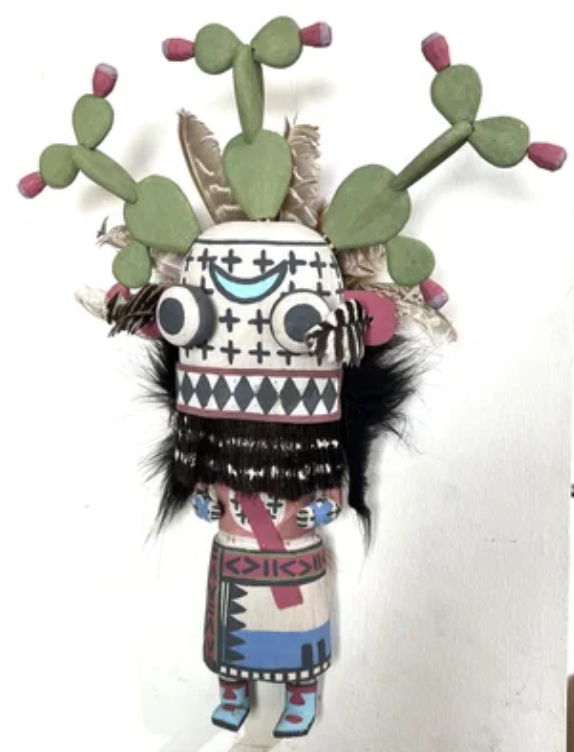
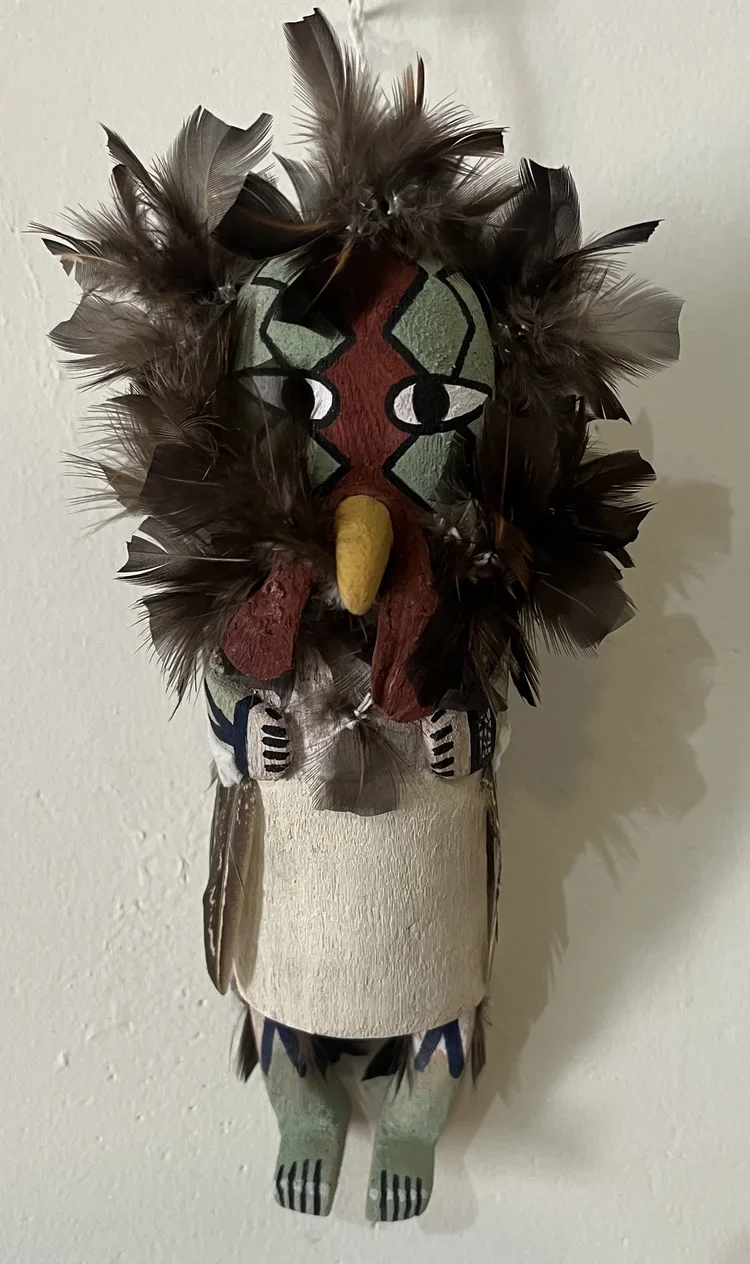
Larry Melendez just brought in a Yungya or Cactus Katsina. 15 inches tall and $400. A Koyongo (Turkey) katsina by Ethan Bryce of the Tobacco and Rabbit Clans. 9 inches tall. $300. (BOTH in TUCSON)
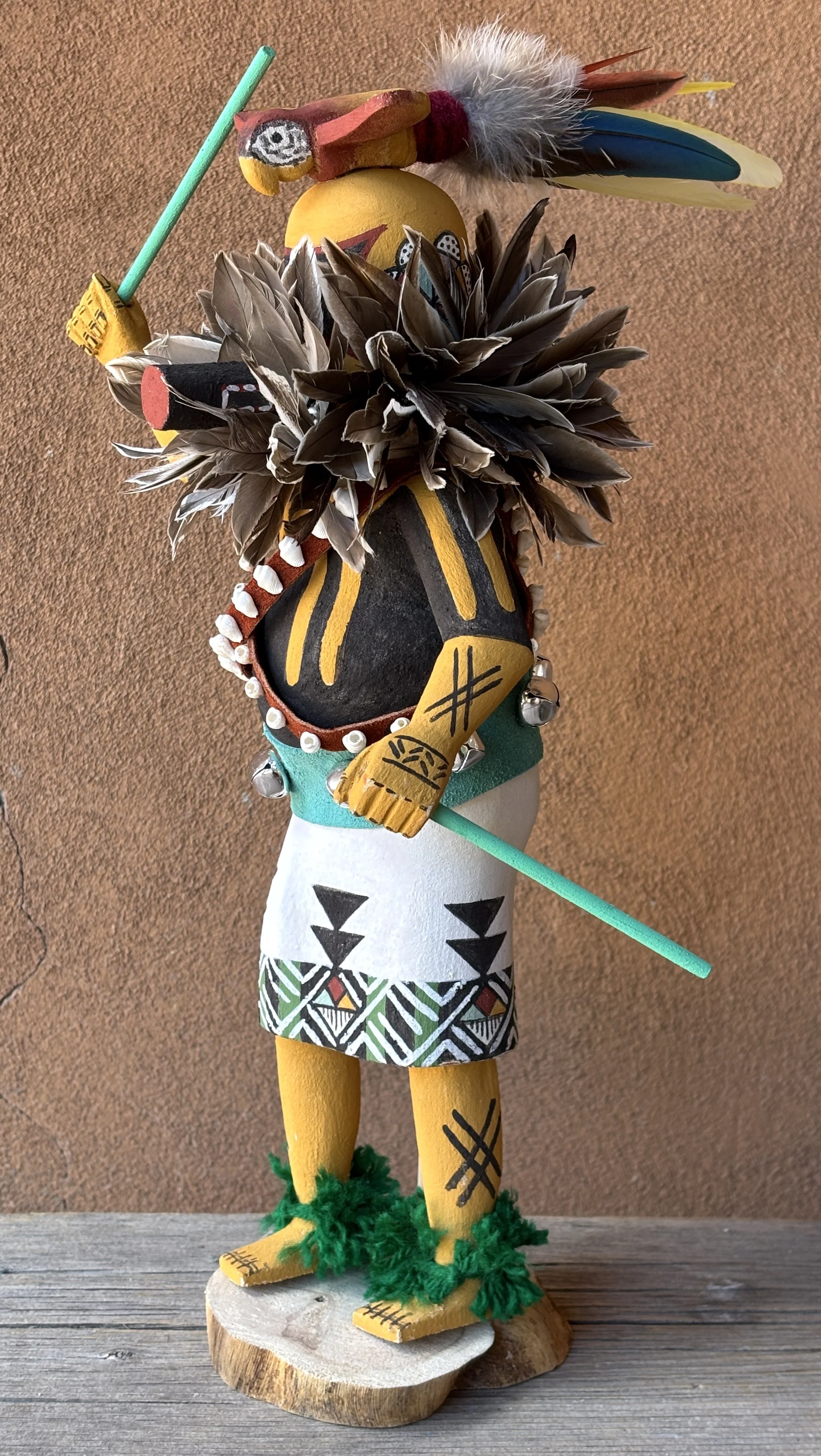
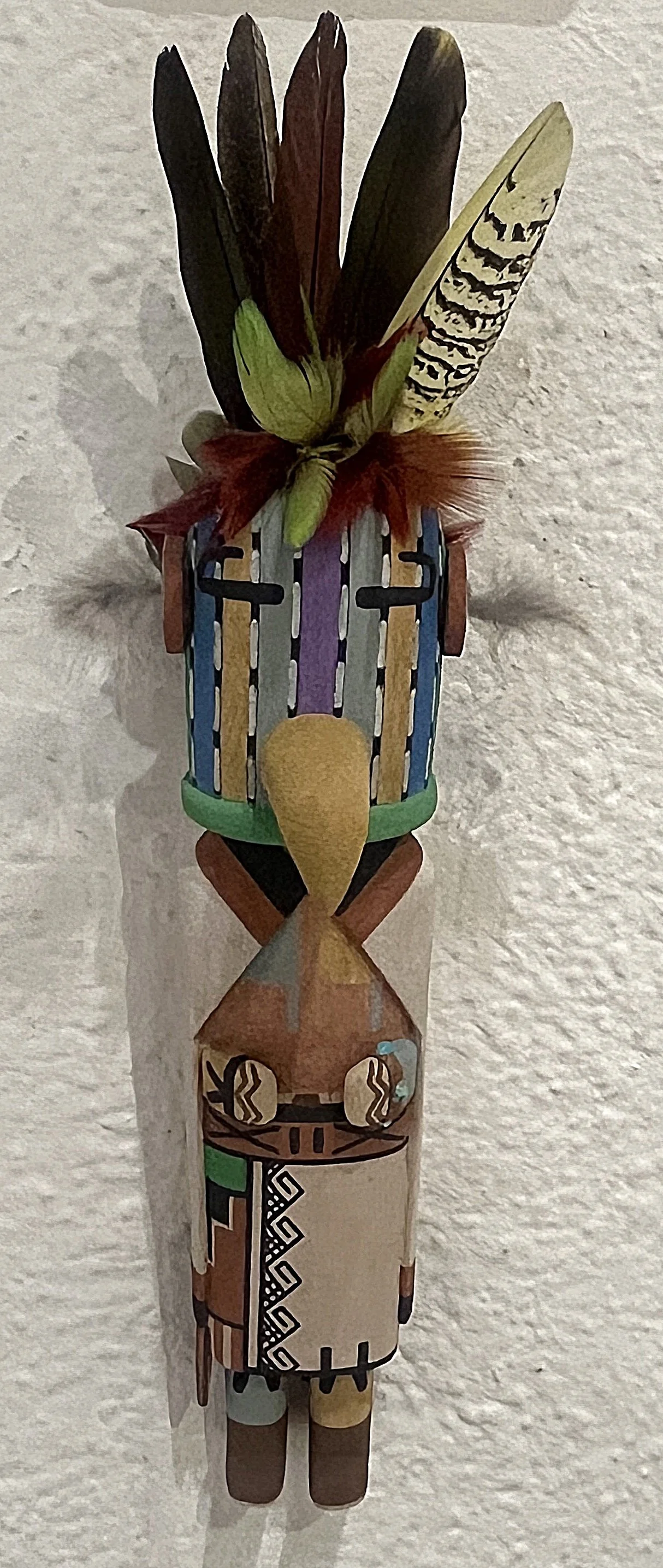
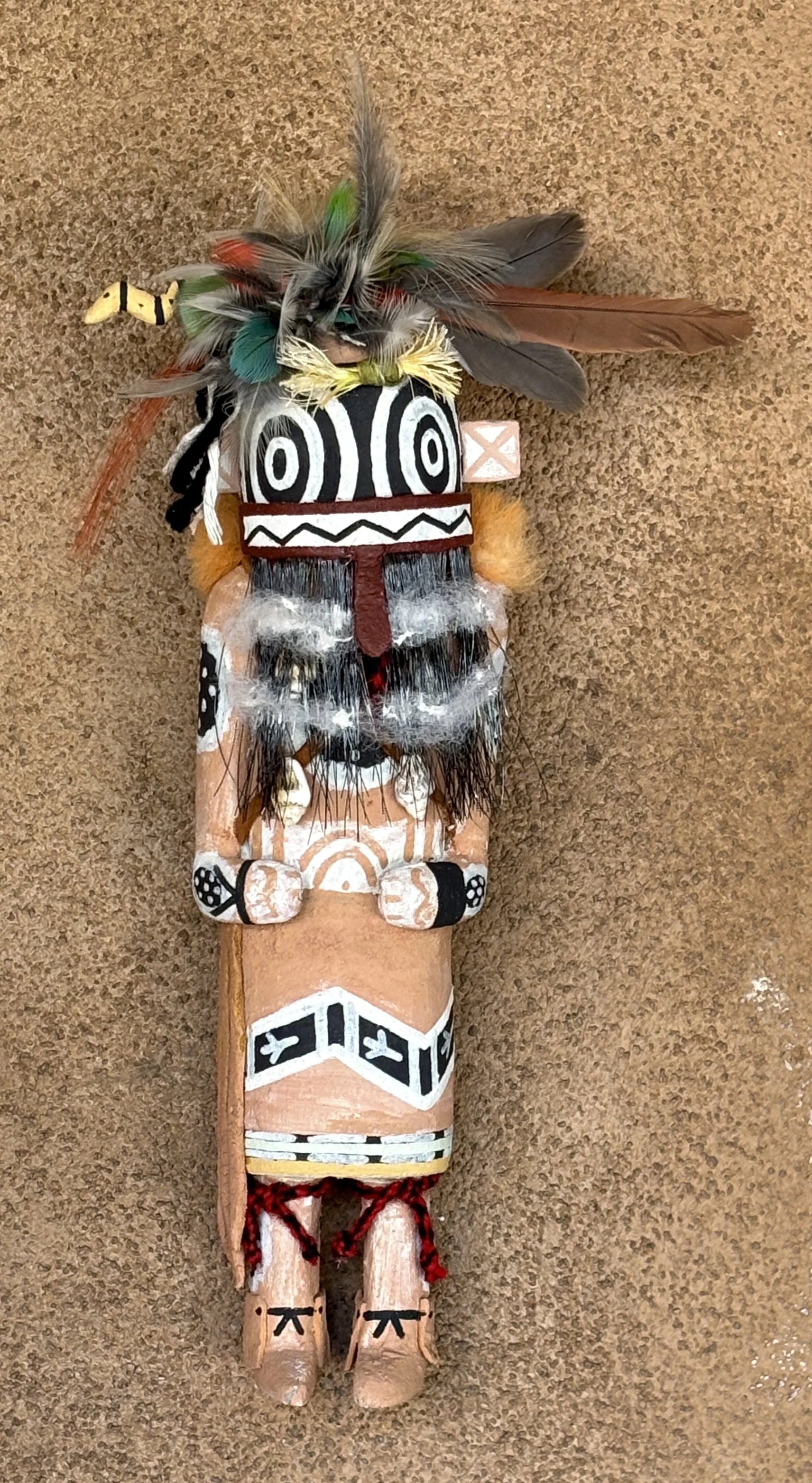
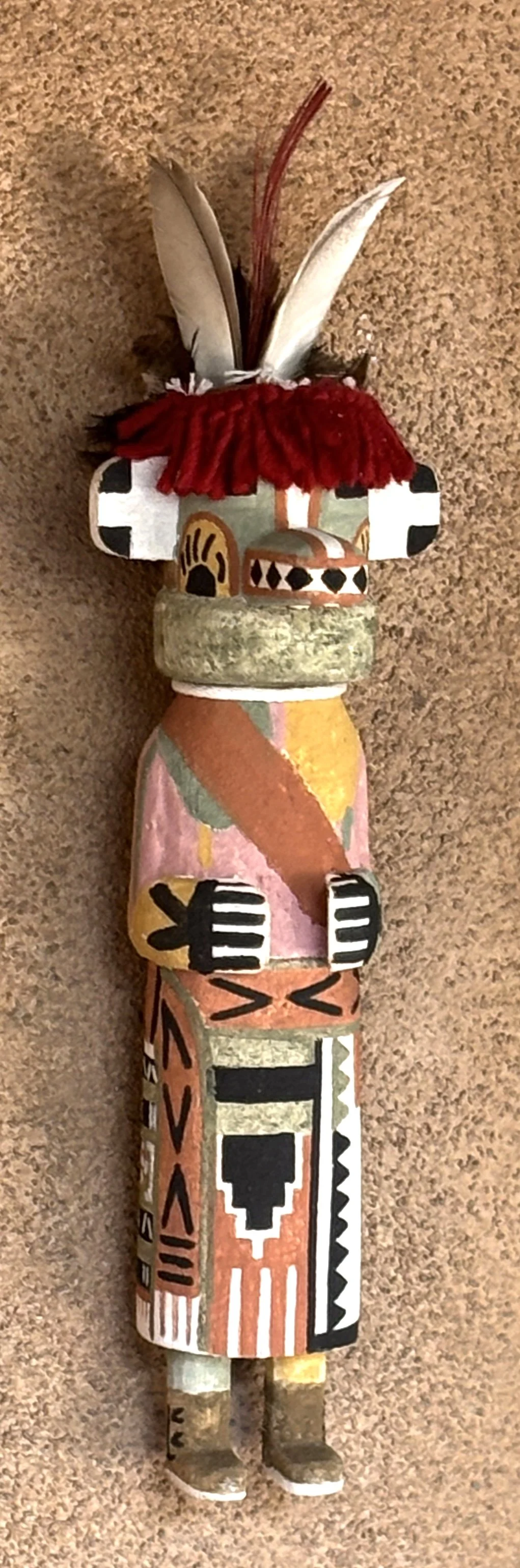
A Sipikne or Zuni Warrior made by Ethan Waters. This one is 14.5 inches high and $600. The Tsitoto of Tobacco Flower is is by Augustine Mowa III. 13 inches tall and $300. A Hilili by Jordan Kaye, 10.5 inches high and $320. At right is a Sakwa Honan or Blue Badger katsina by Brian Holmes. This one is 12 inches high to feather tip and $280. (ALL IN SANTA FE)


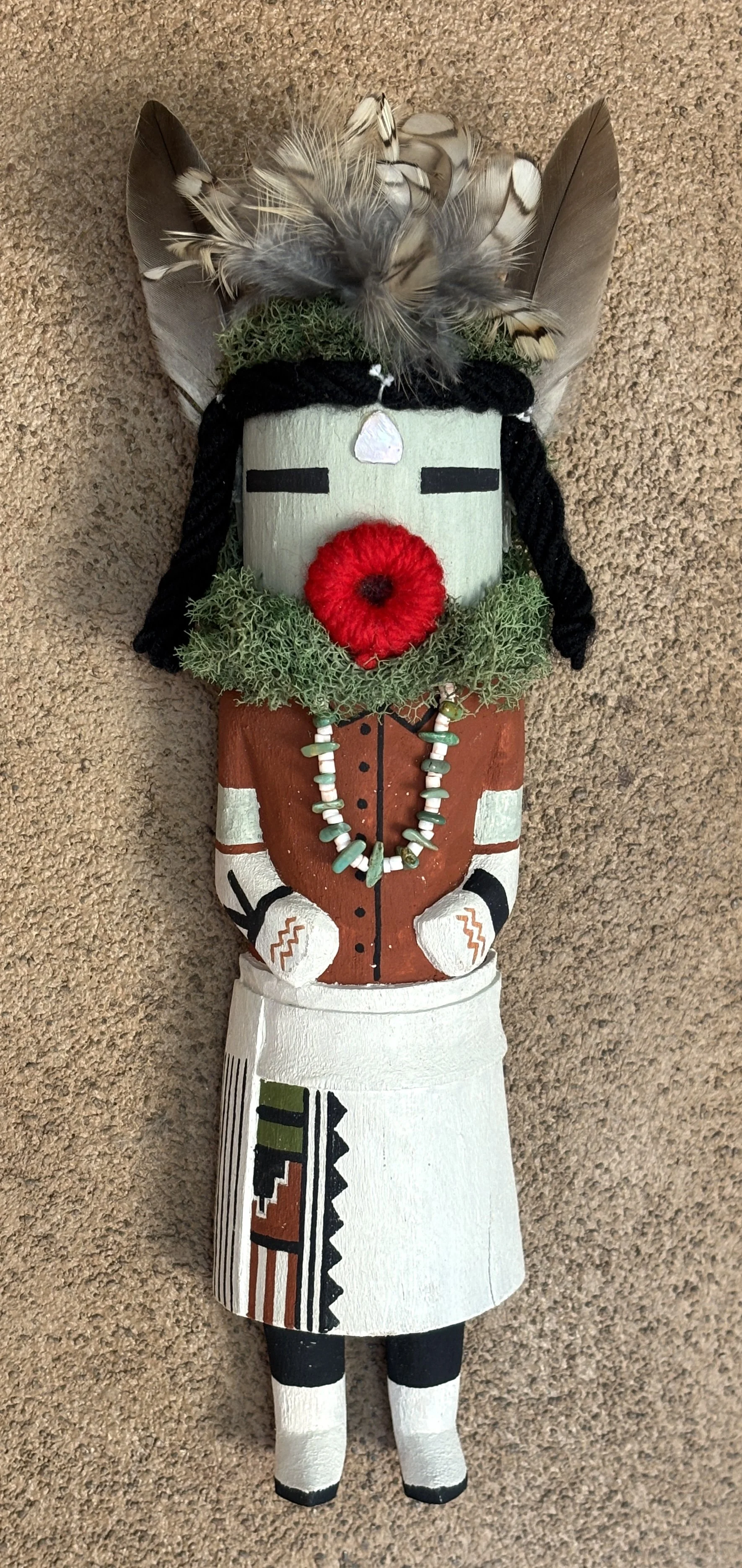
The Kookopölö, 7 7/8 inches high and $250 was carved by the late Willard Maktima (1929-2025), grandfather of renowned jeweler, Duane Maktima. At right is a Maakkatsina or HUnter katsina by Dal’Suhu Not-Afraid, 10.75 inches high and $400. (Both in SANTA FE)
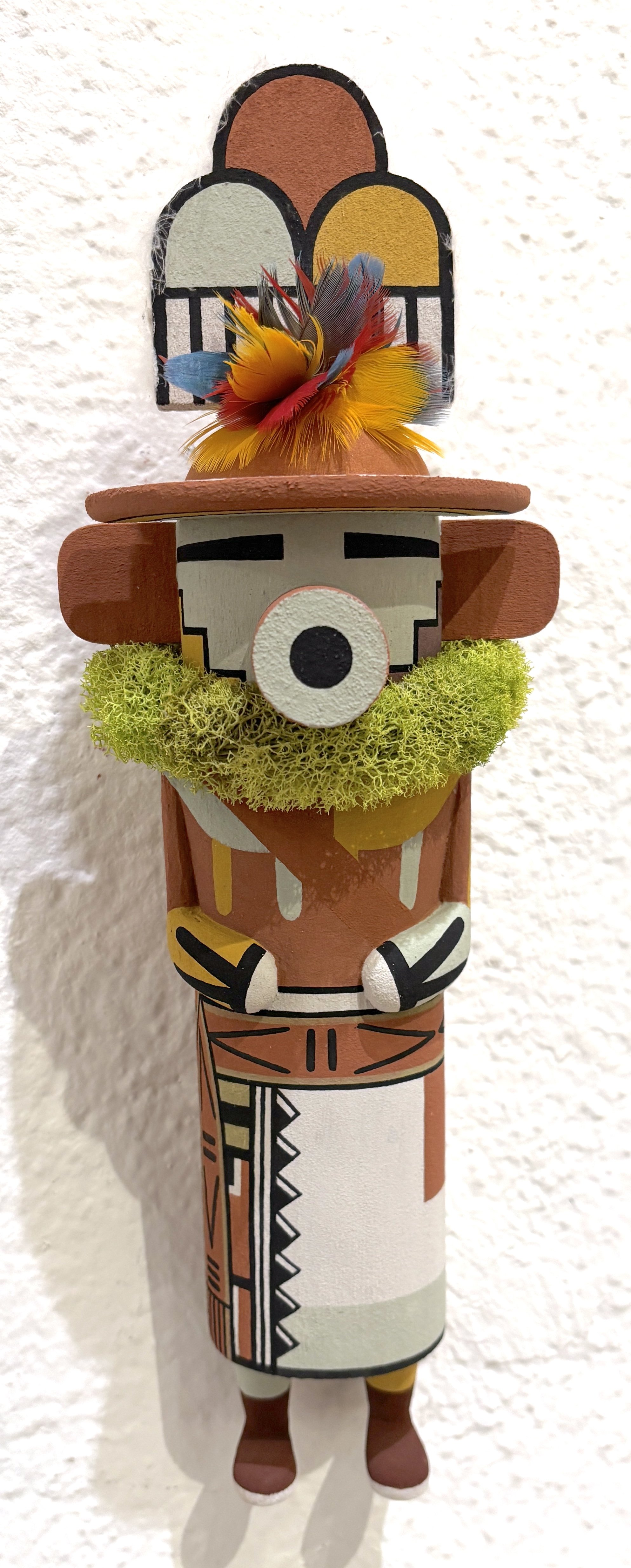
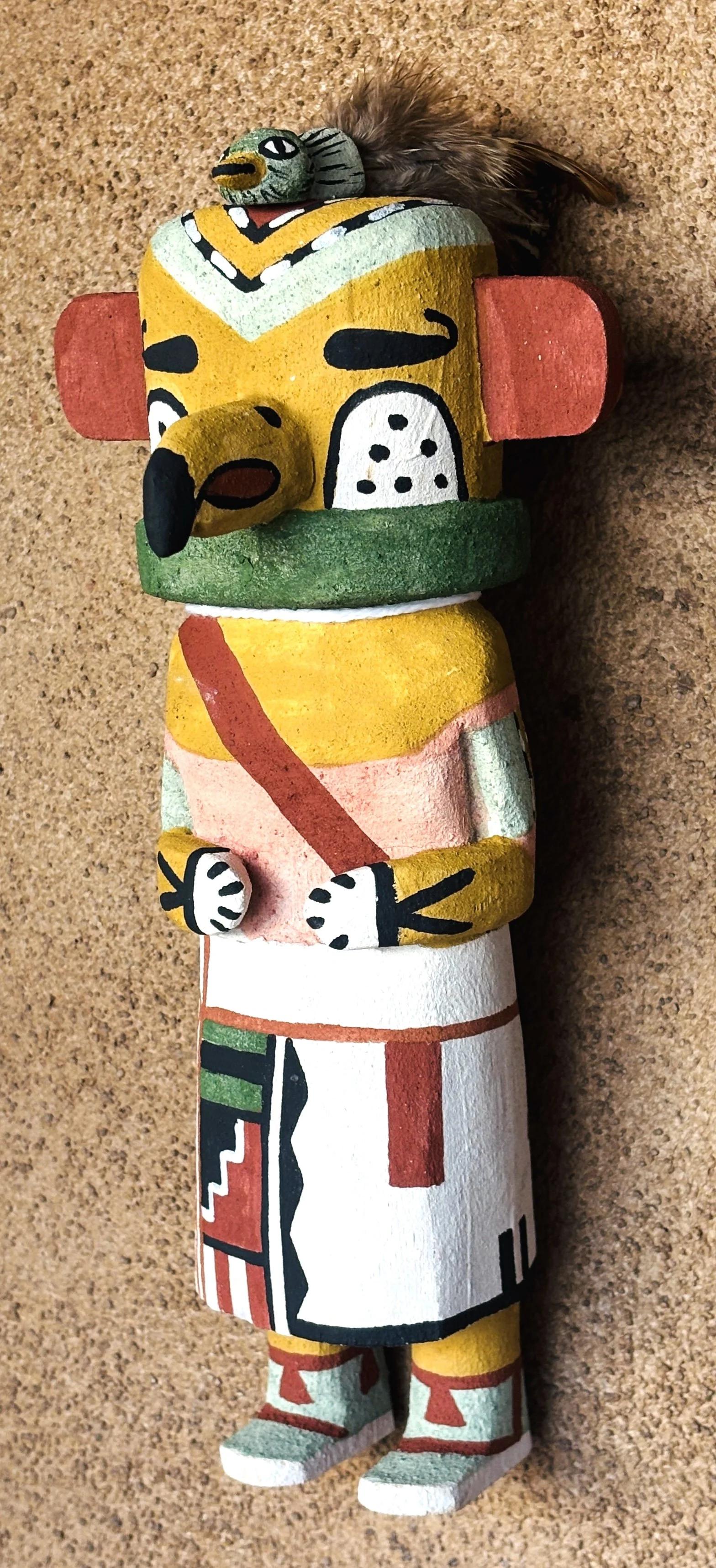
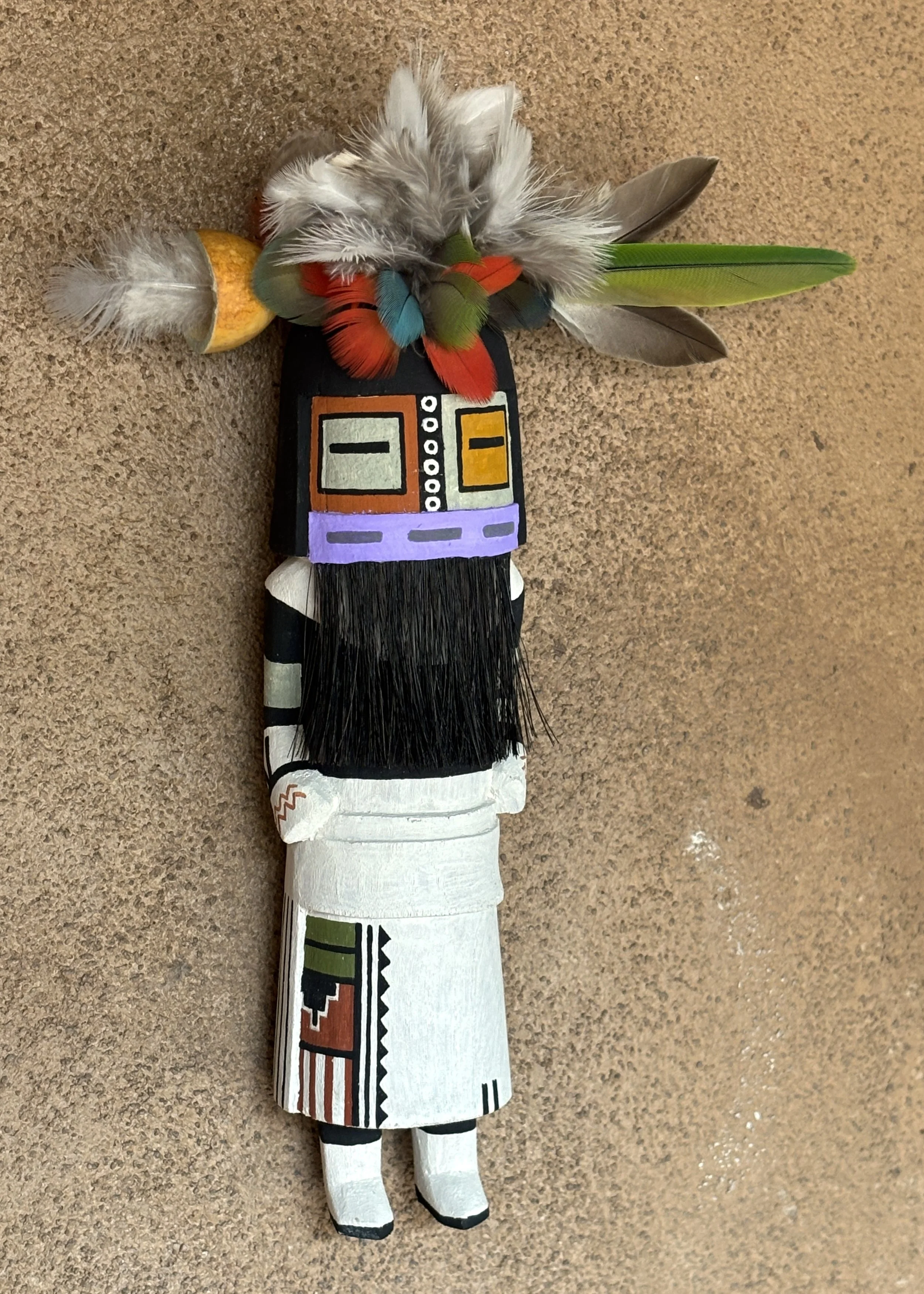
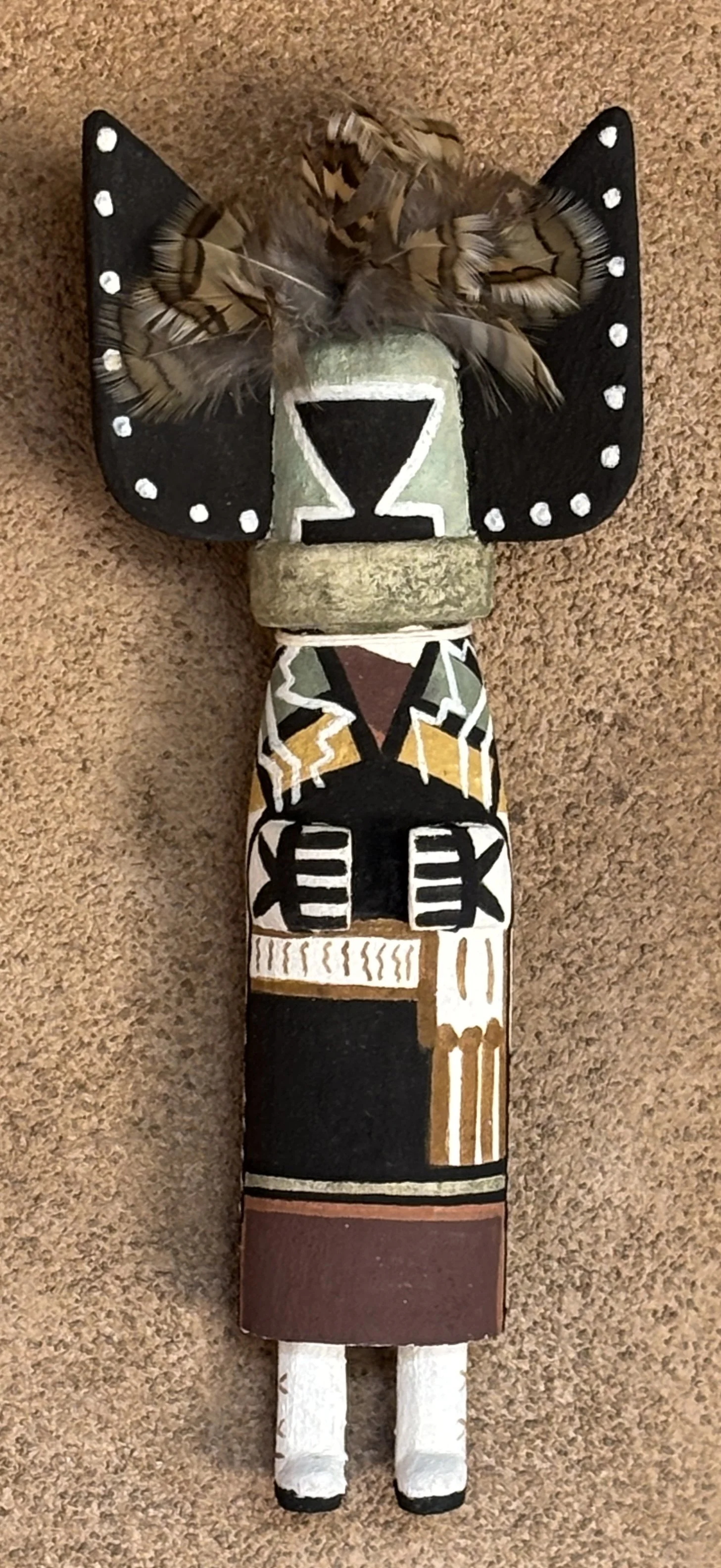
An Omaw by Ryan Gashweseoma 12.25 inches tall and $425. Next is a Kyarkatsina or Parrot katsina by Horace Kayquaptewa. 9 inches high and $275. Last in the row is a Yöngoksina or Turtle katsina by Dal’Suhu Not-Afraid. 10 inches high to feather tips and $400. An Angwusanomtaqa or Crow Mother by Brian Holmes. 10 5/8 inches high and $280. (ALL in Santa Fe)
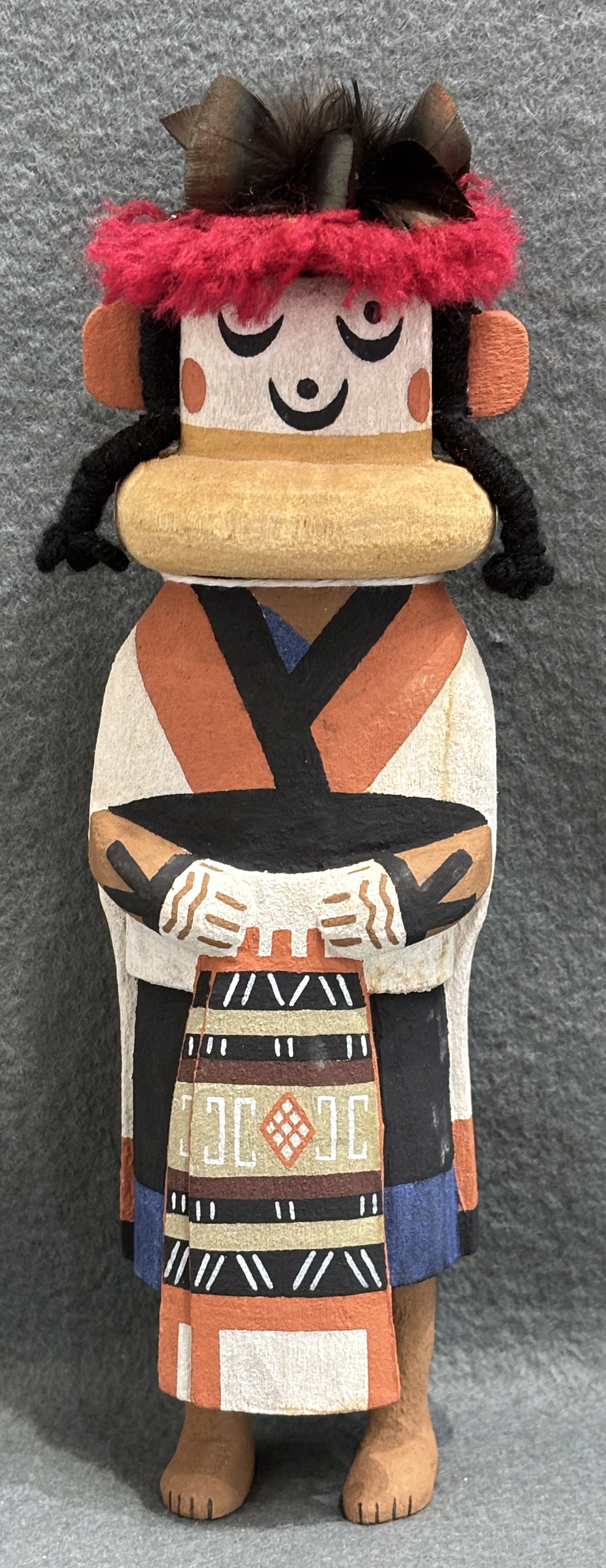
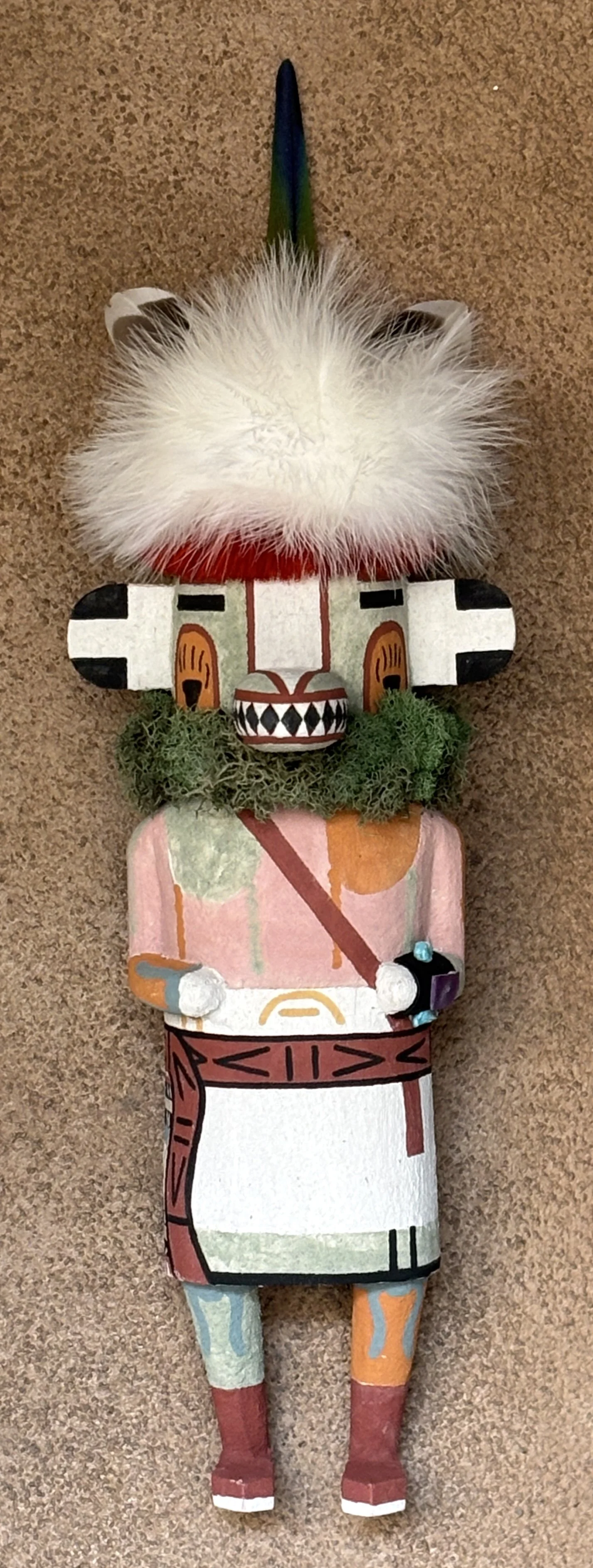
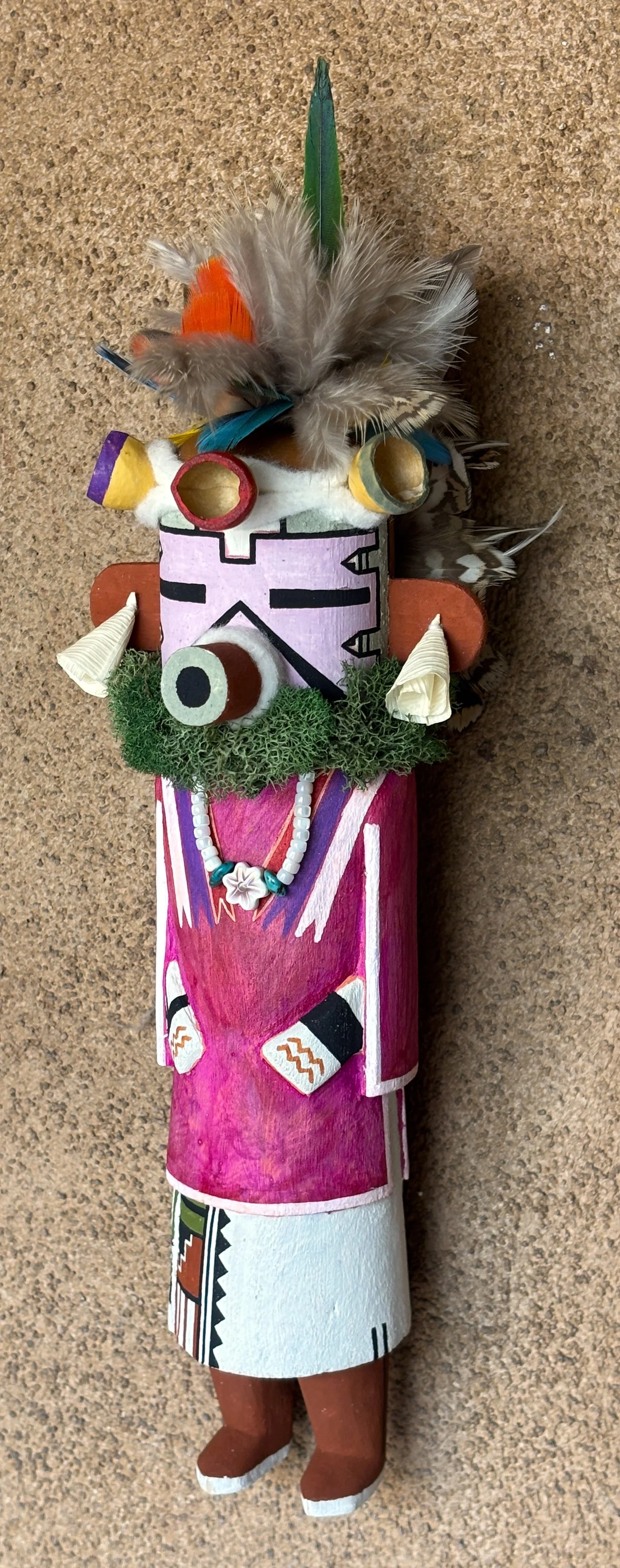
By Hongvi Marquez, a Hahai’iwuuhti or Grandmother katsina is 9.5 inches high and $375. A Sakwa Honan or Blue Badger katsina by Sean Macias. 15 3/8 inches high and $400. At right is a Navan or Velvet Shirt katsina by Dal’Suhu Not-Afraid. This one is 11.25 inches high and $400. (ALL in SANTA FE)

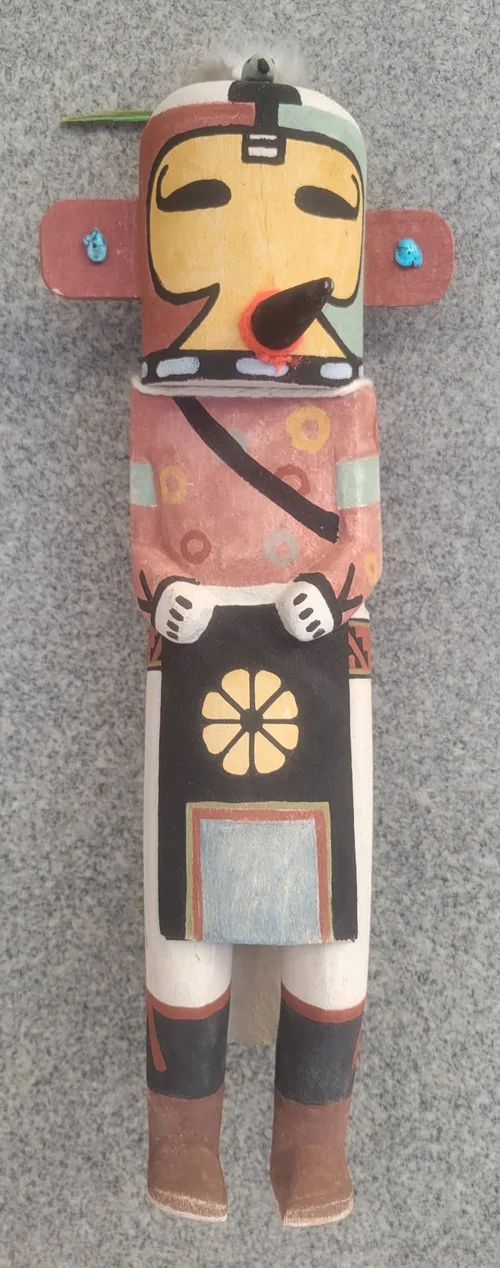
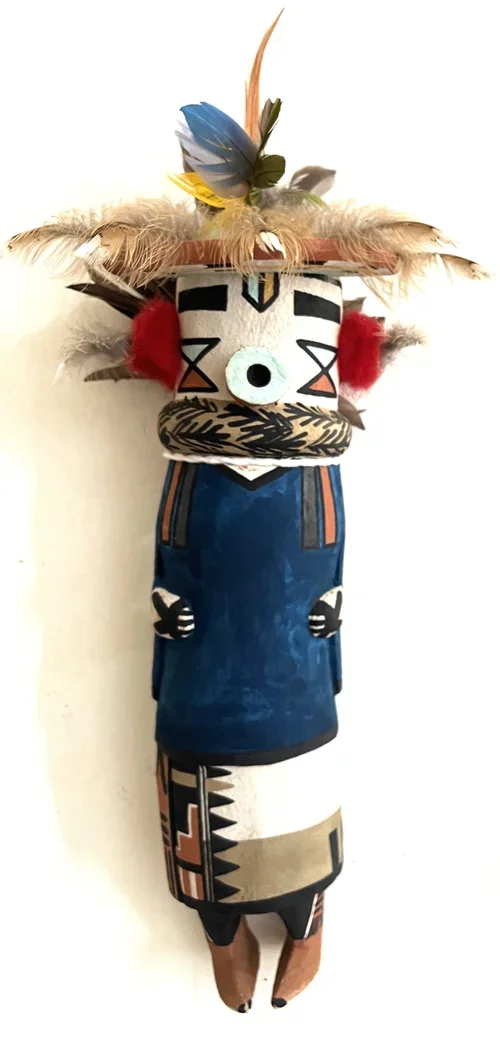
A Pöökhonghoya by Ed Seechoma. 12 inches and $450. A Totsa or Hummingbird katsina by Brandon Kayquoptewa is 11 inches and $275. A Sio Navan or Zuni Velvet Shirt katsina by Randy Brokeshoulder. 17 inches to the tip of the feather and $350. (ALL in TUCSON)
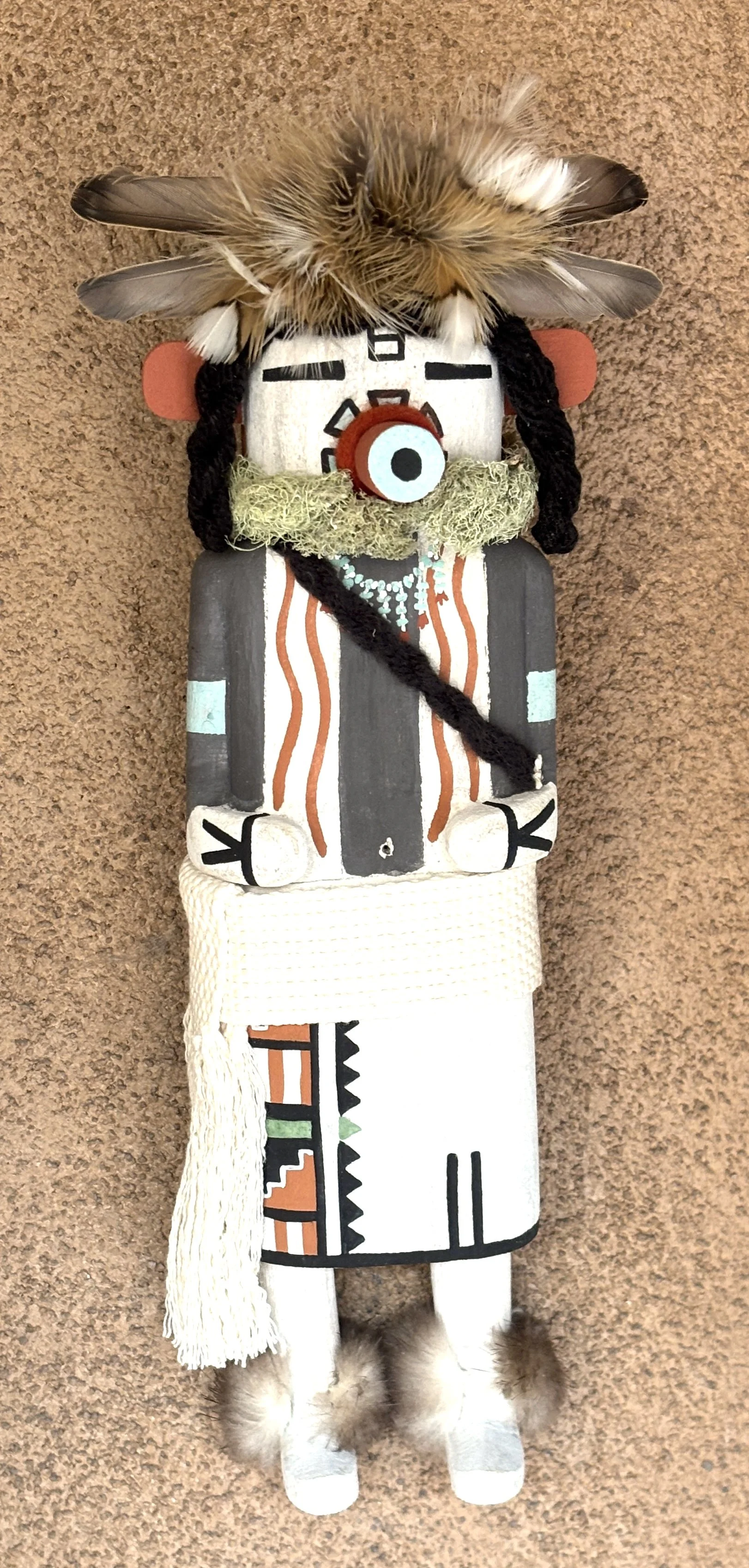
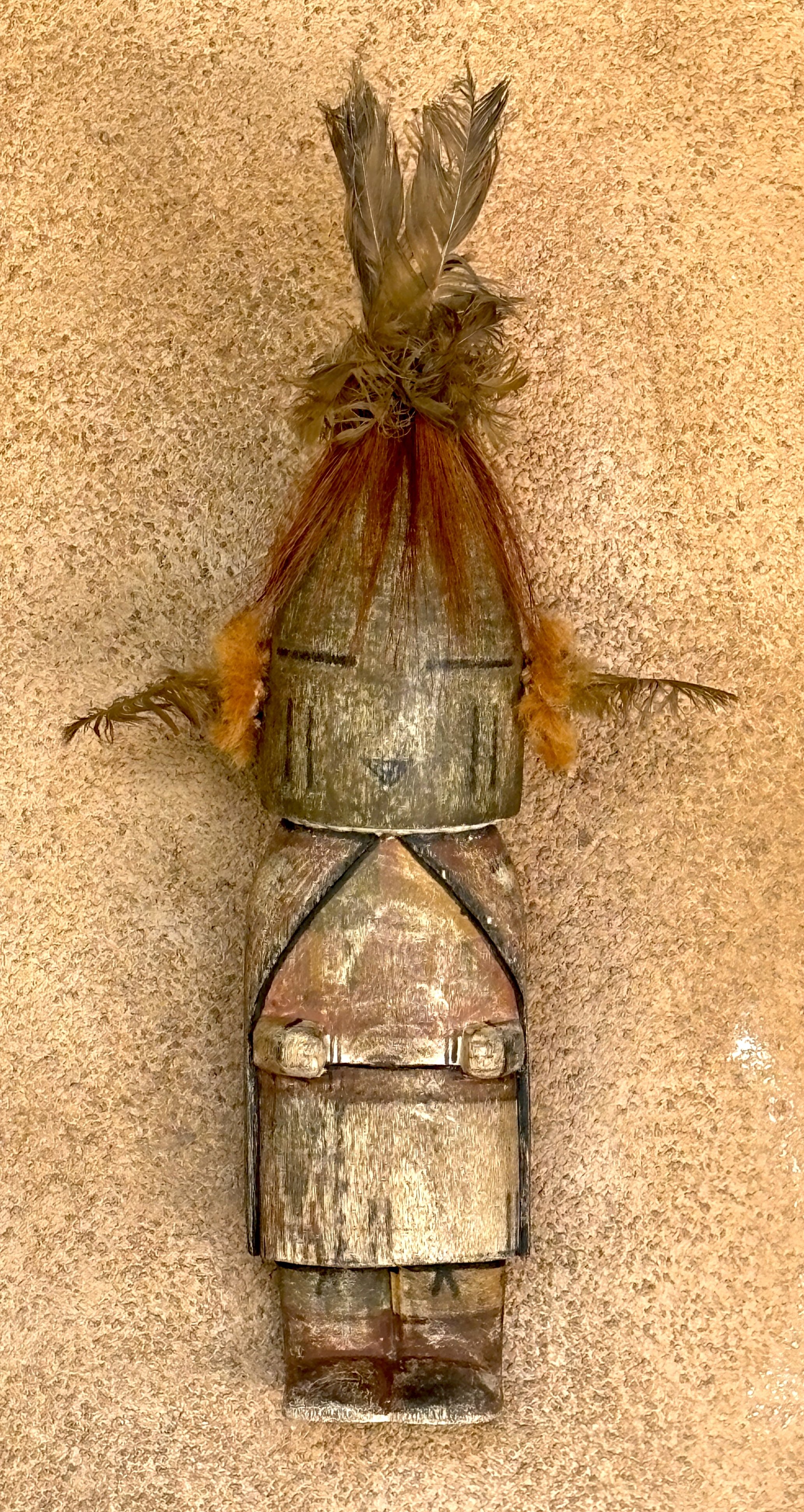
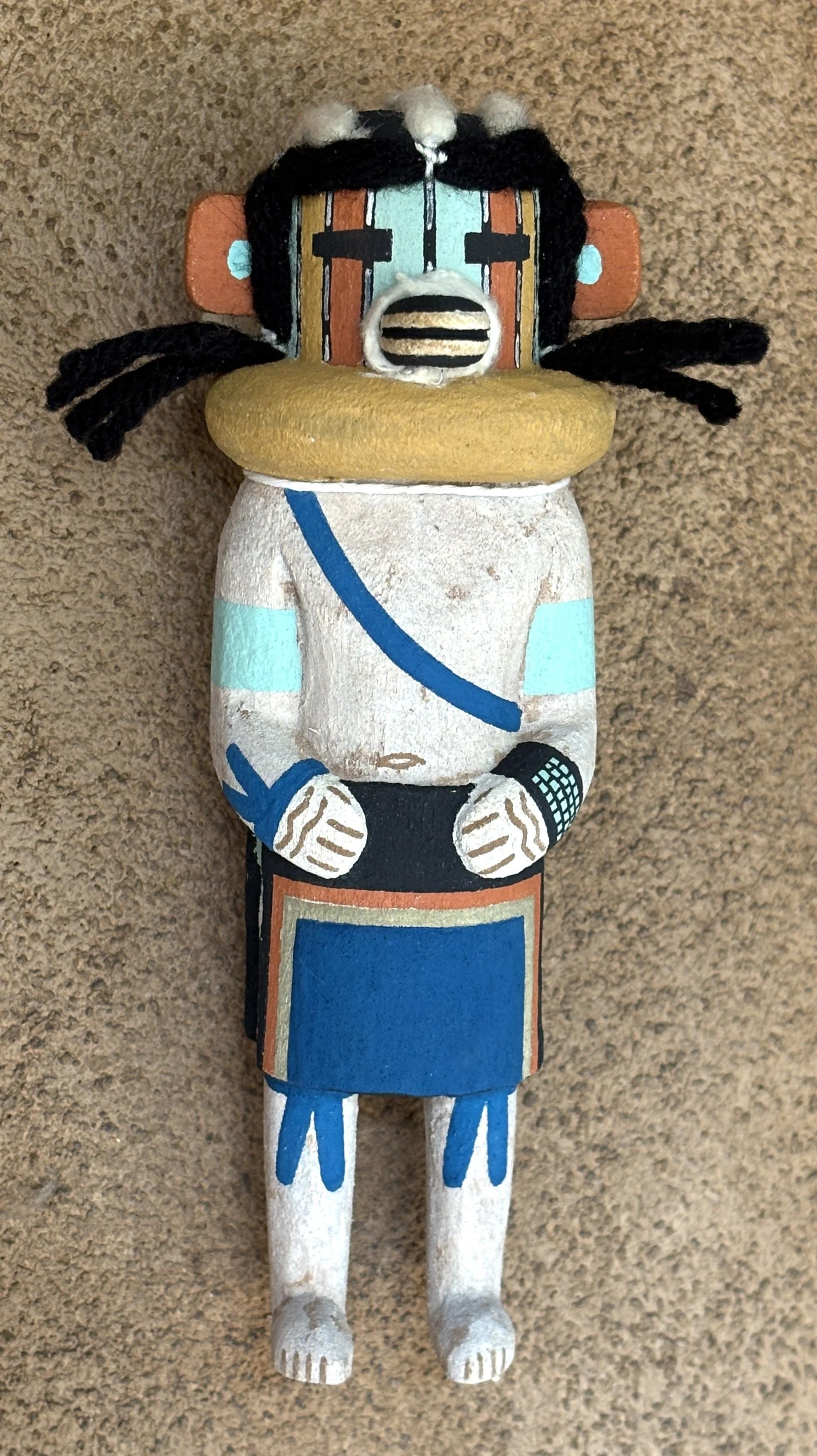
A Ngayayataqa or Swaying Man katsina by Shawn Deel. 10 inches high and $425. Next is an Àhooli, one of the Mong or Chief katsinas by Tayron Polequaptewa. This one is 12 inches high to feather tip and $375.A Patsoktsina or Cockleburr katsina by Hongvi Marquez. 6.75 inches high and $240. (ALL IN SANTA FE)
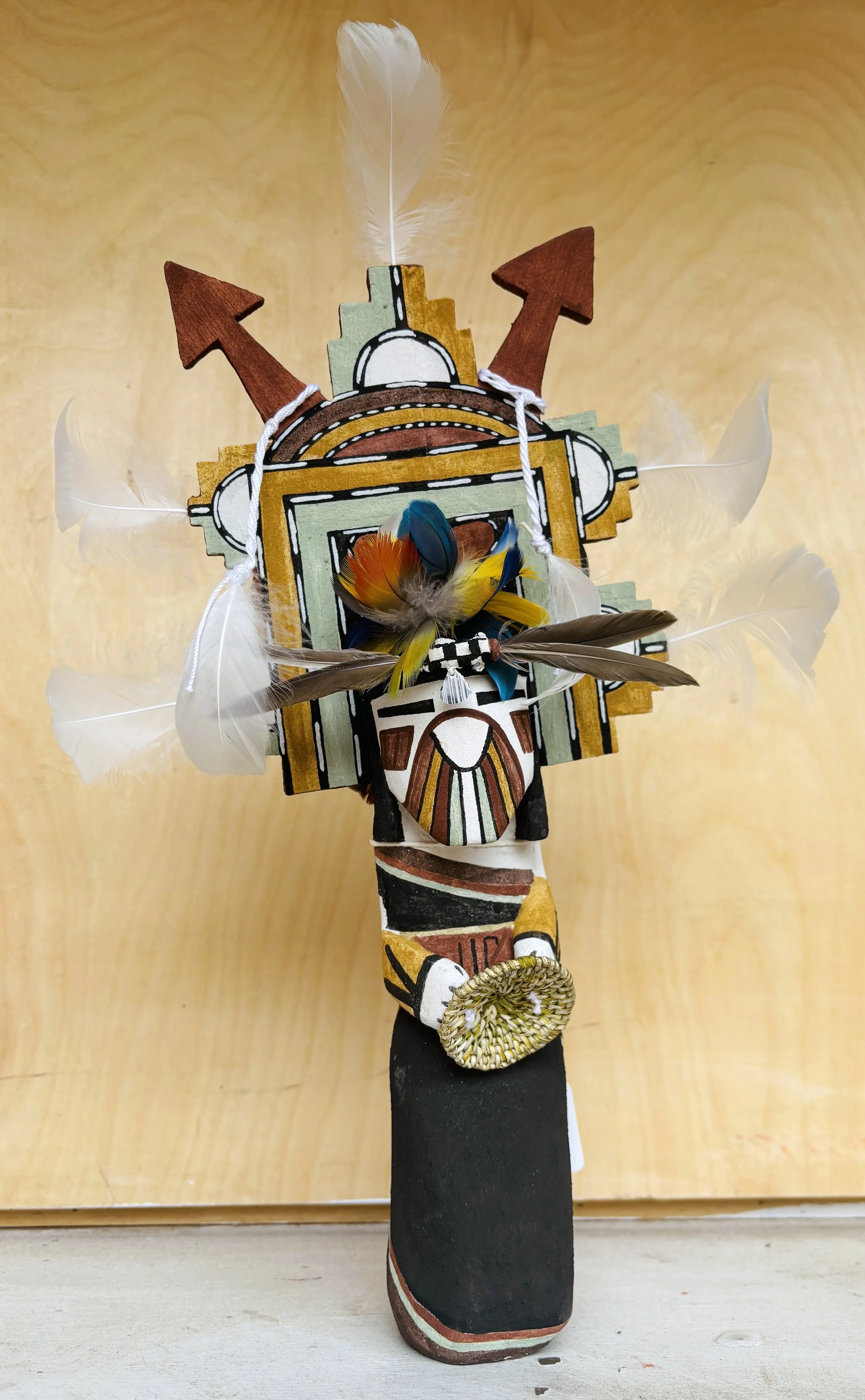
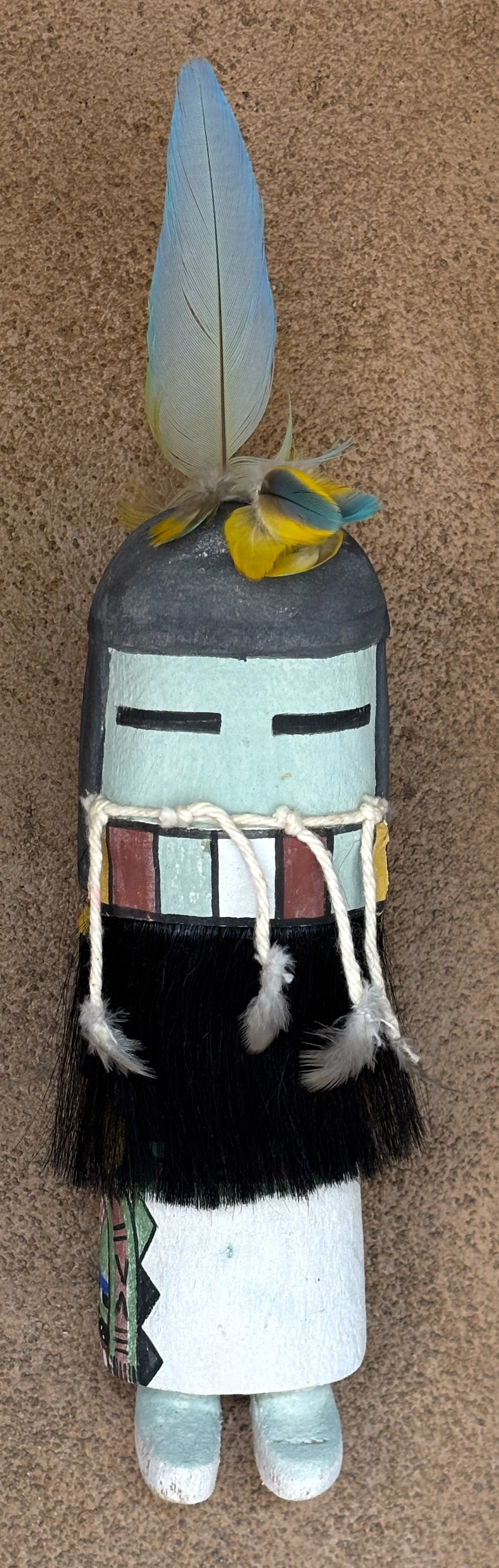
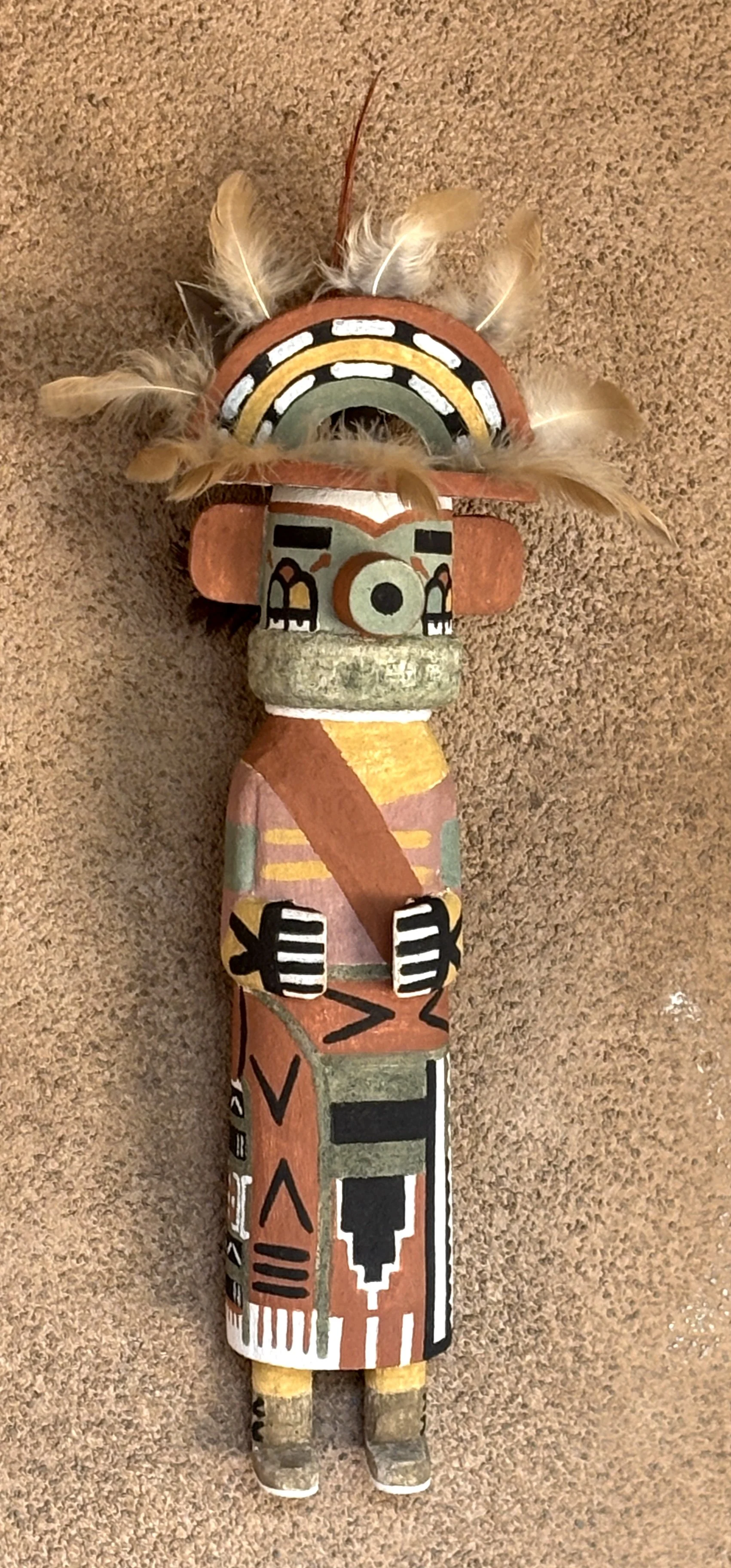
A Palhikwmana or Butterfly Maiden by Jared Quamahongnewa. She is 16.75 inches high to feather tip and $450. Next is an Anak’china by Quentin Sakeva. 12.75 inches high and $300. A Tangak.wunu or Rainbow katsina by Brian Holmes. 13 1/8 inches high to feather tip and $280. (ALL in SANTA FE)
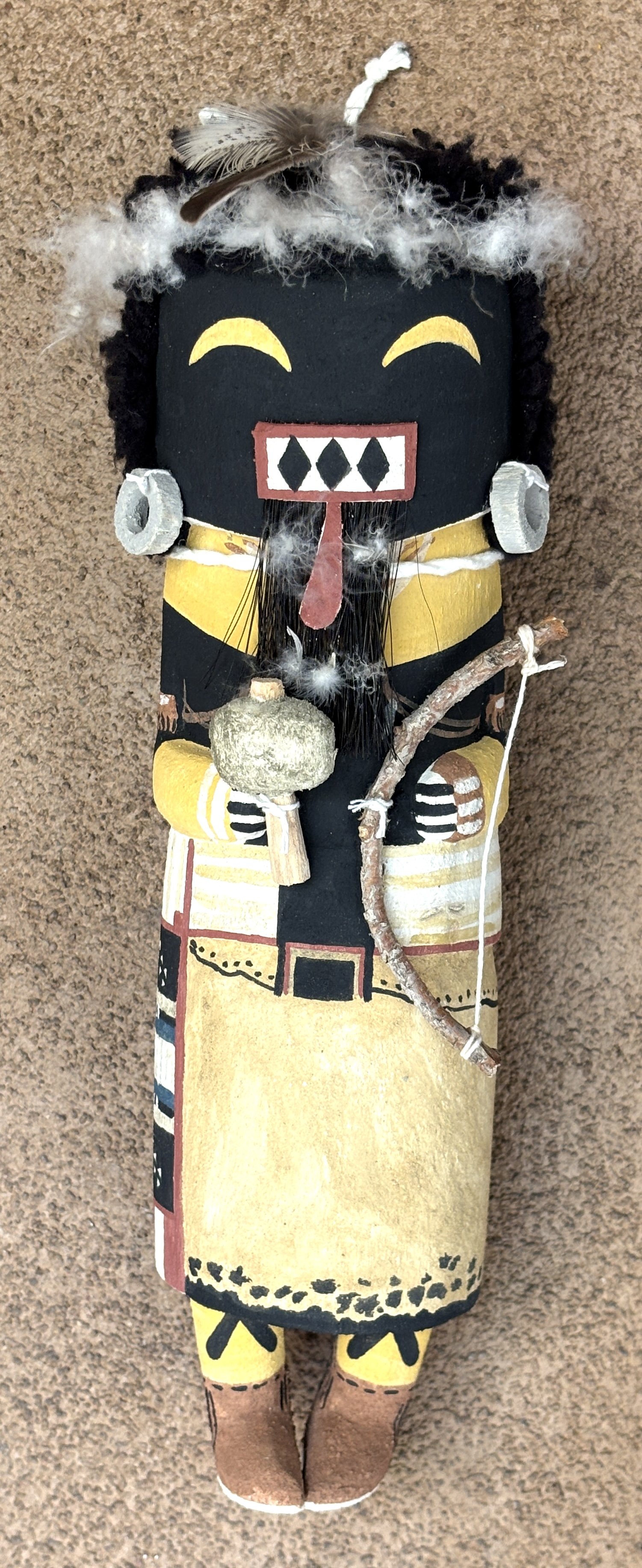
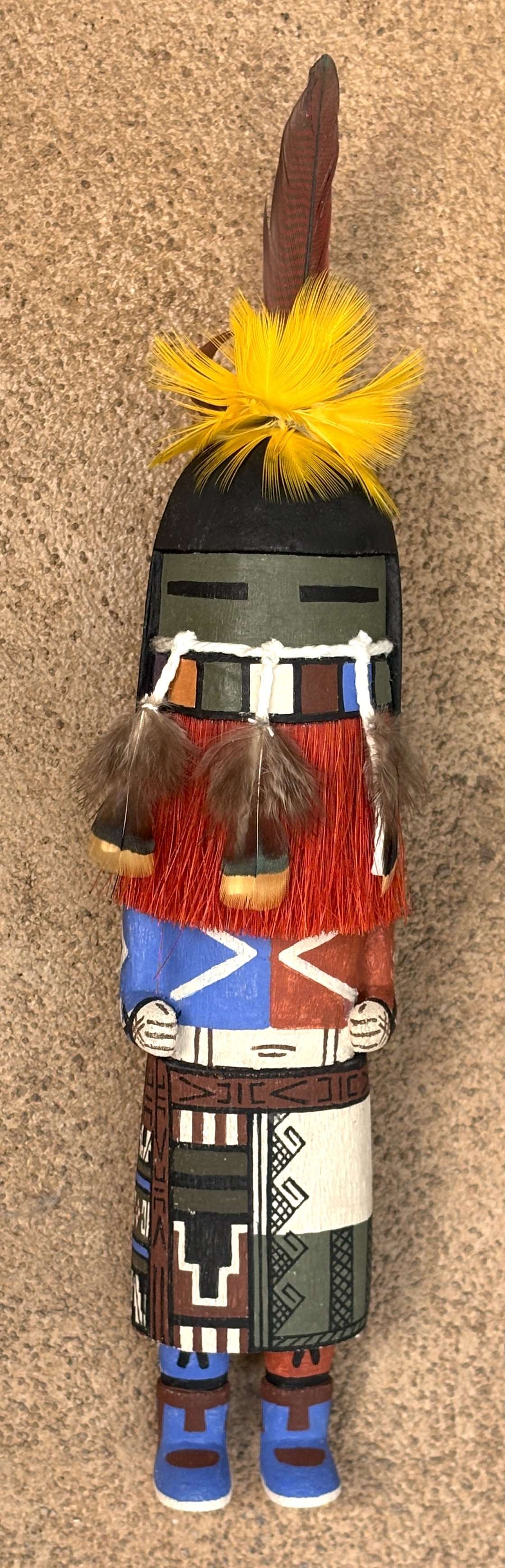
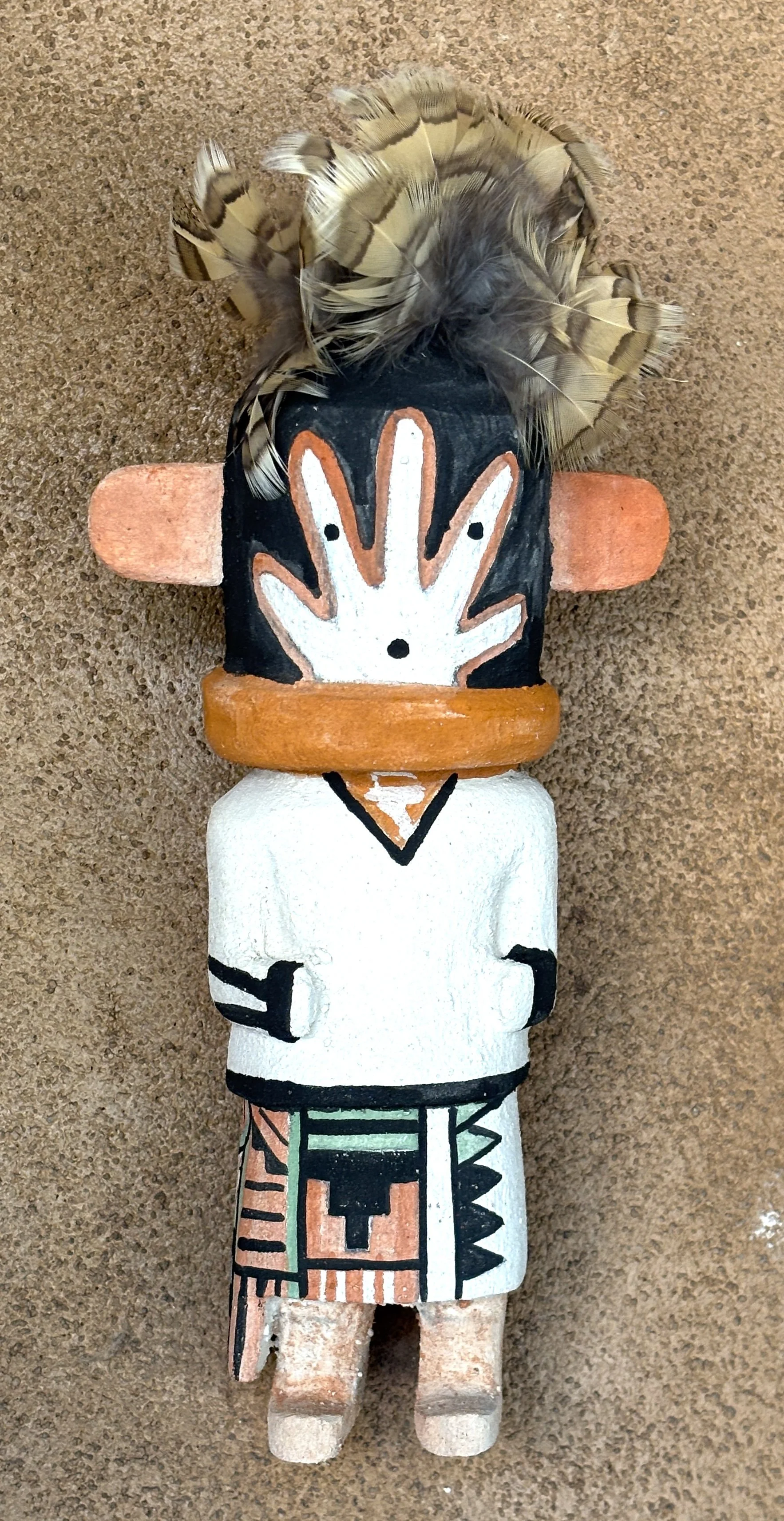
A Tsa’kwayna** by Randy Brokeshoulder, 10 inches high and $320. A Pusukinangaktsina or Red Beard Longhair by Tayron Polequaptewa. This one is 11 7/8 inches high and $450. A Sivu’ikwiwtaqa or Pot Carrier Boy, he is known by a couple of other names as well. This one was made by Sam Masayumptewa, 9.75 inches high and $300. (ALL in SANTA FE)
**He is thought by some to represent the Moor Esteban, who led the Spanish to Zuni as he is a katsina who first appeared at Zuni.
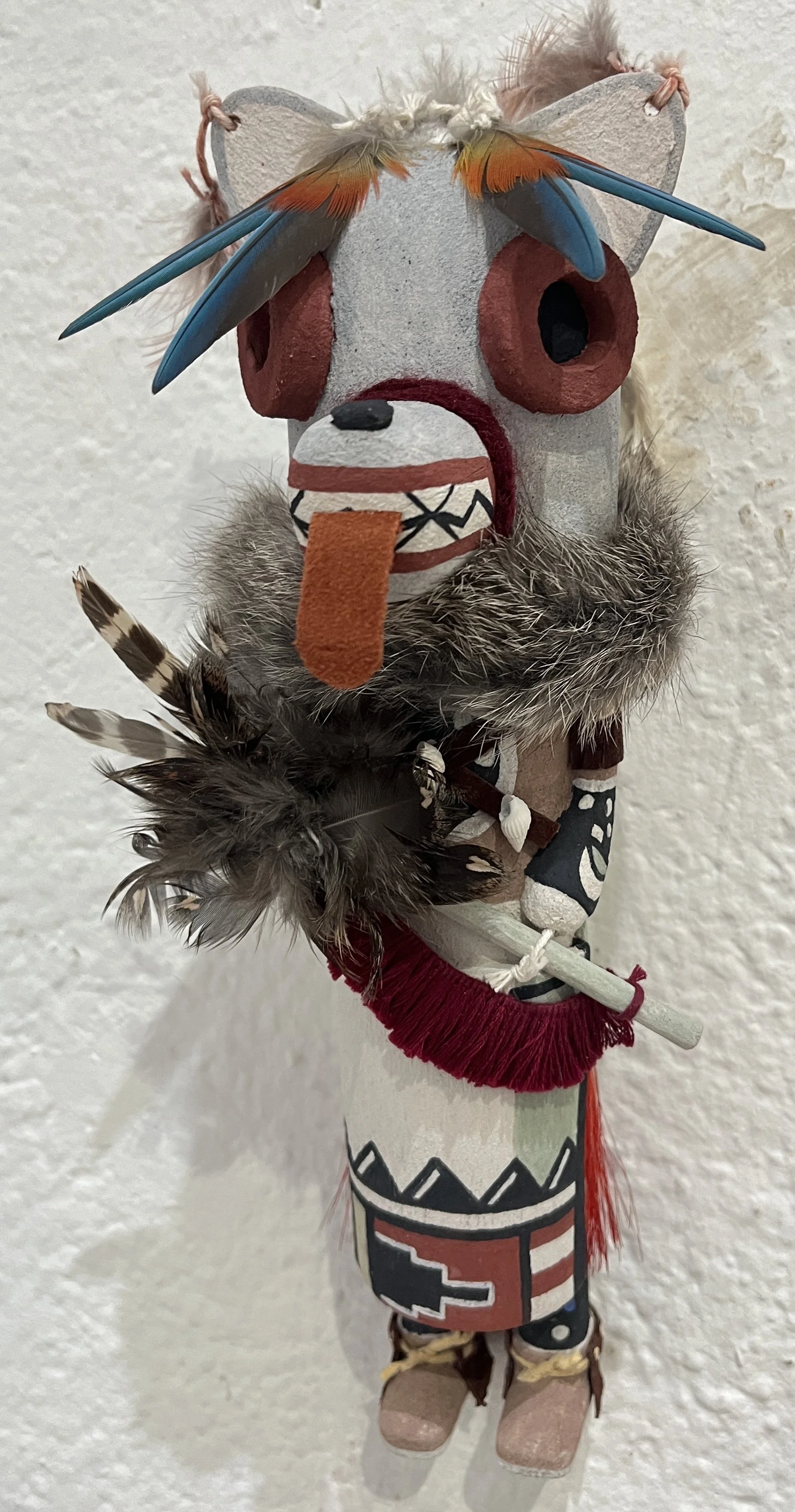
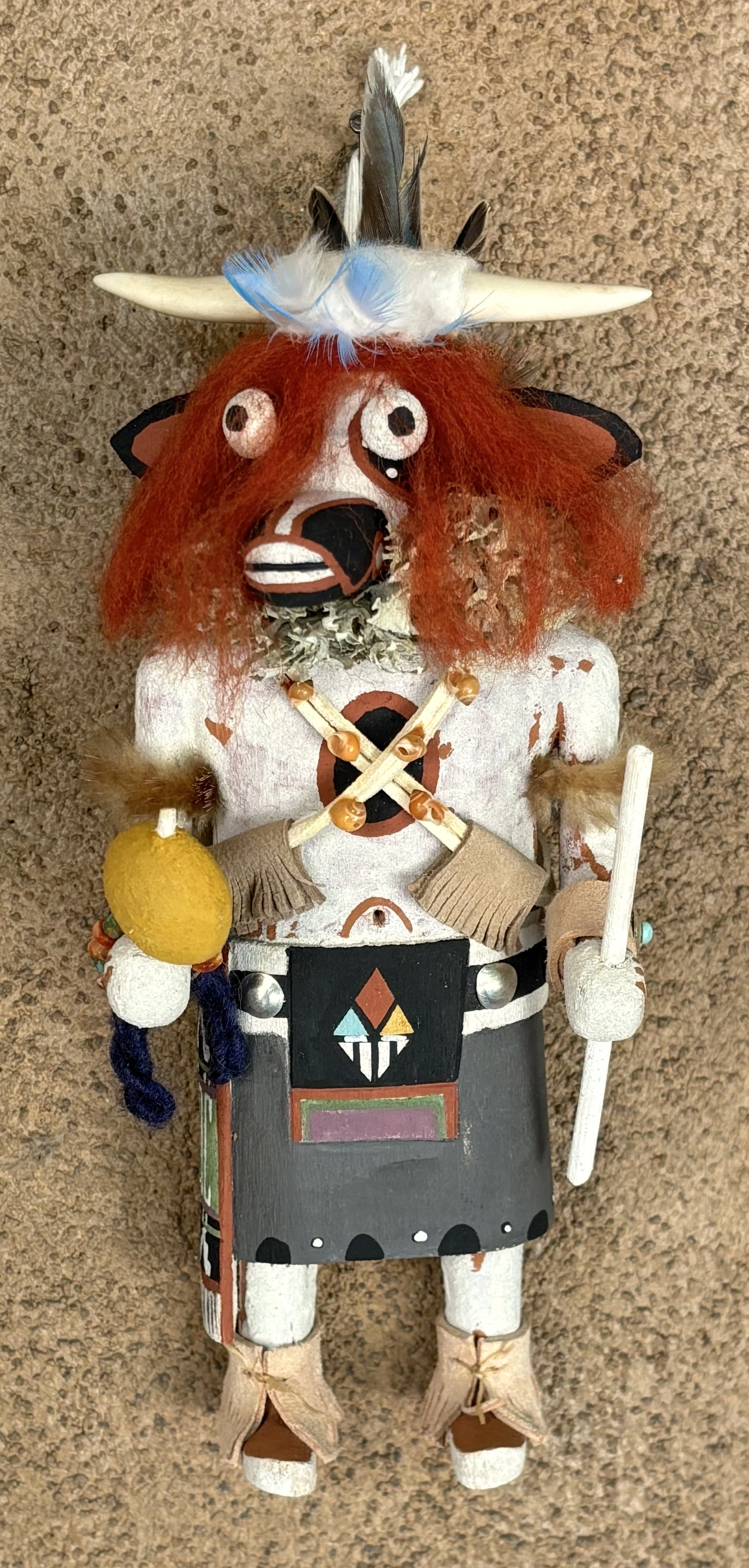
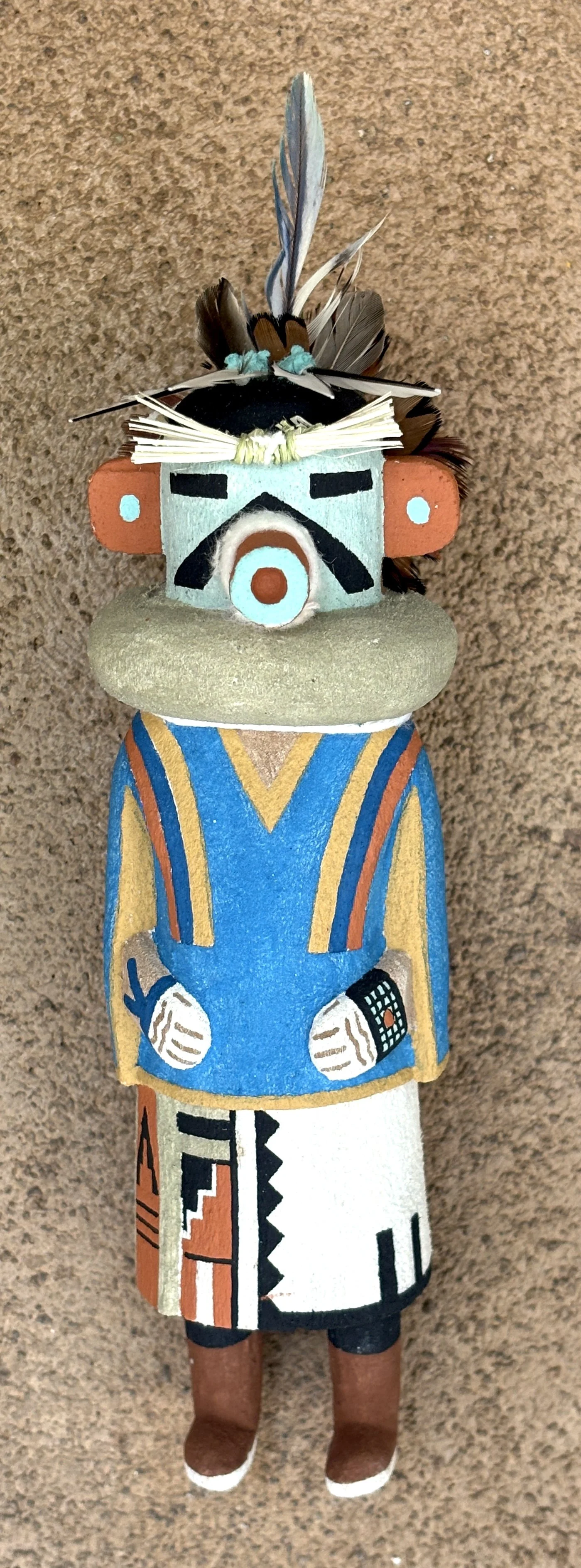
A Kwewu or Wolf katsina by Markus Barton. 11 inches high and $300. A Wakas or Cow katsina by Shawn Deel. The horns are antler, 7.25 inches high and $450. A Navan or Velvet Shirt katsina by Hongvi Marquez. 8 inches high and $240. (ALL in Santa Fe)
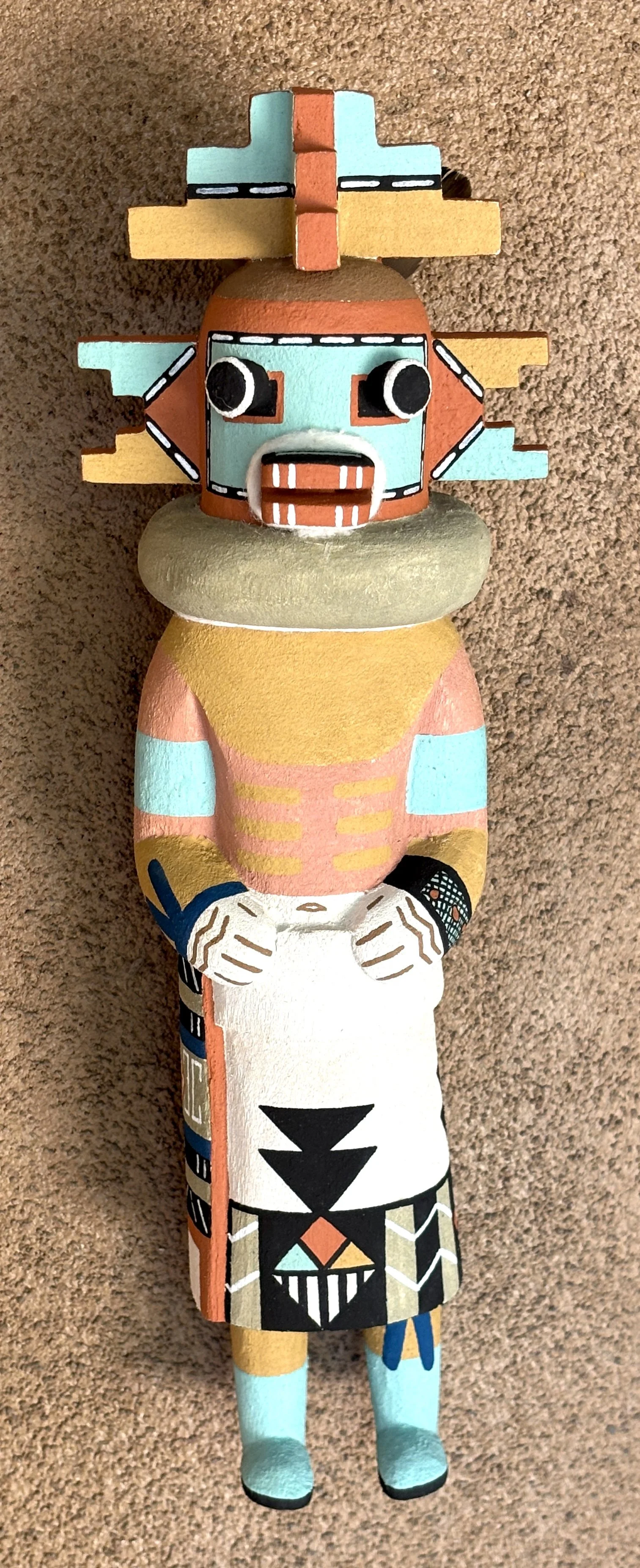
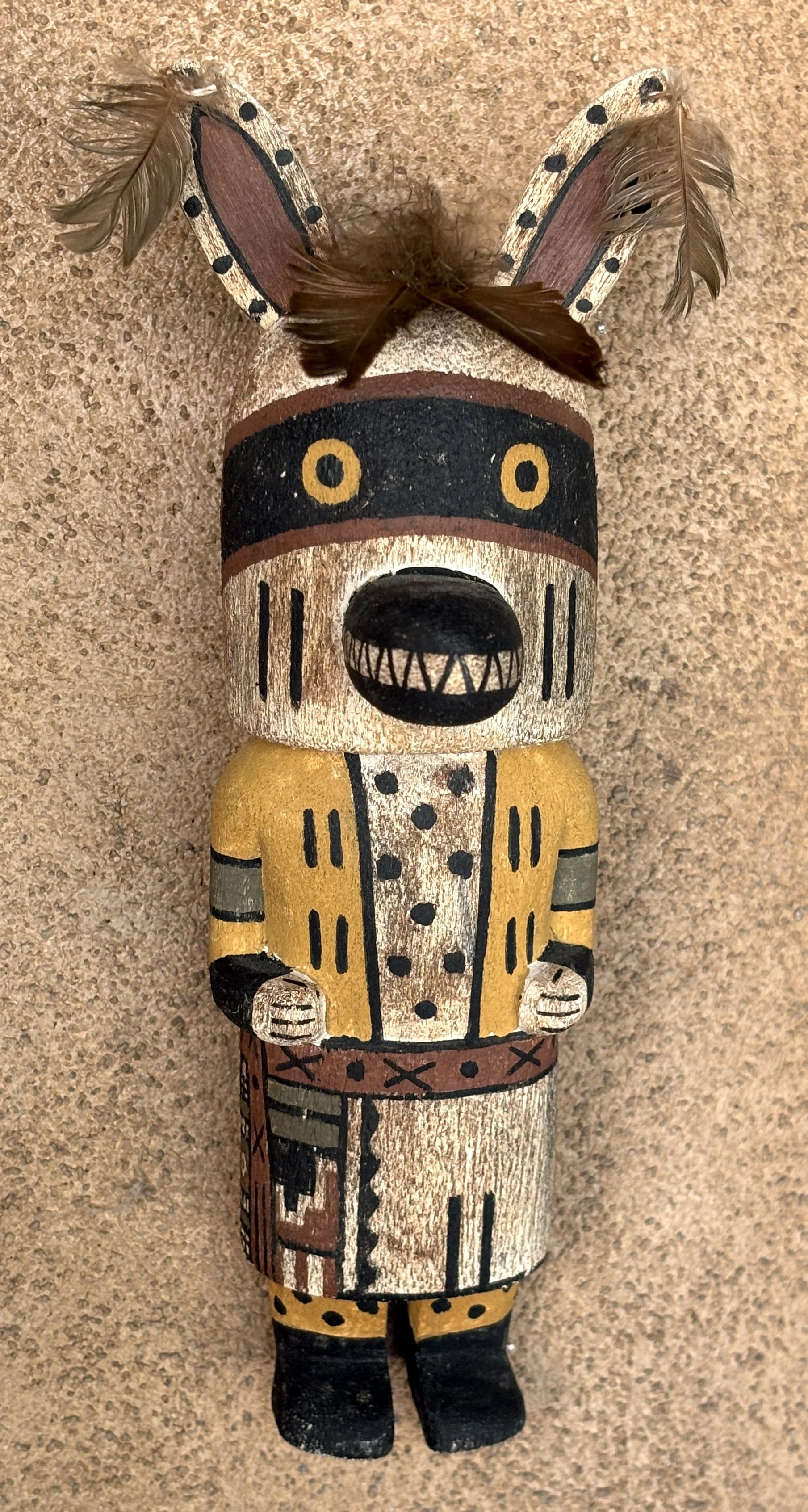
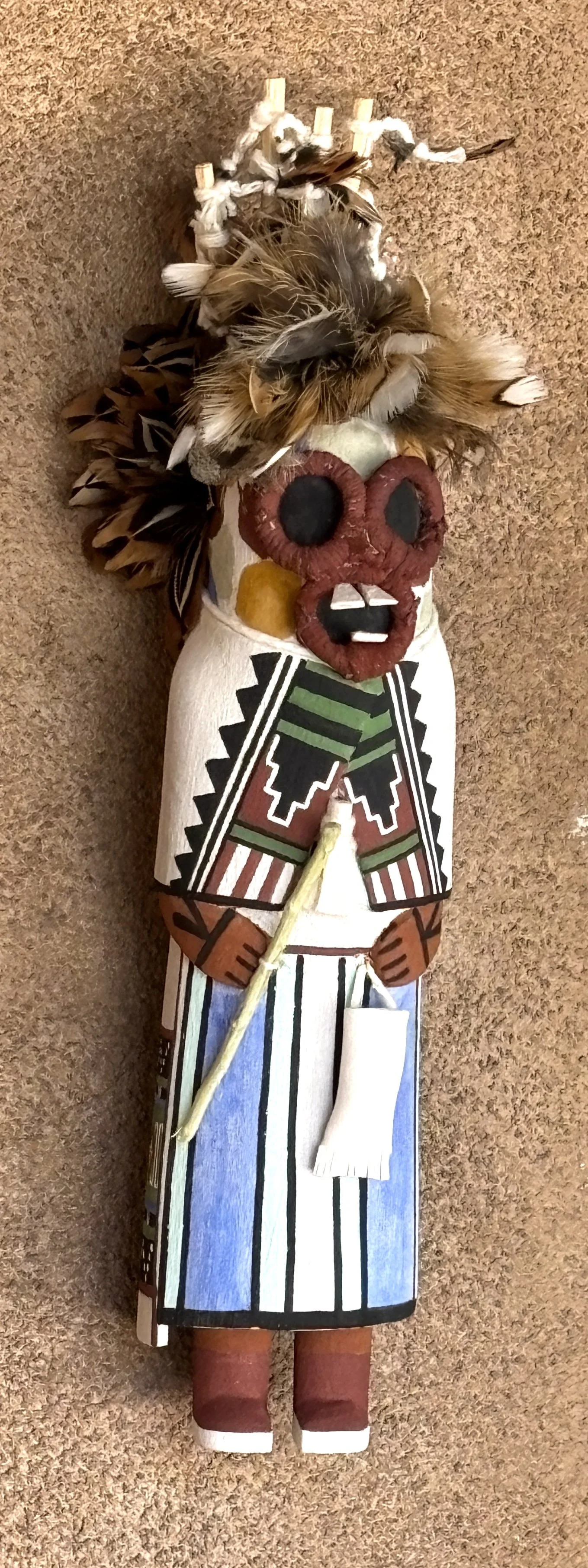
An Omaw, Cross Cloud, katsina by Hongvi Marquez. 11 1/8 inches high and $500. In the middle is a Tewaquaptewa style doll by Tayron Polequaptewa. This one is 8.5 inches high and $250. The Maasaw at right was made by Ladamian Polequaptewa. This one is 11 7/8 inches high and $250. (ALL in SANTA FE)

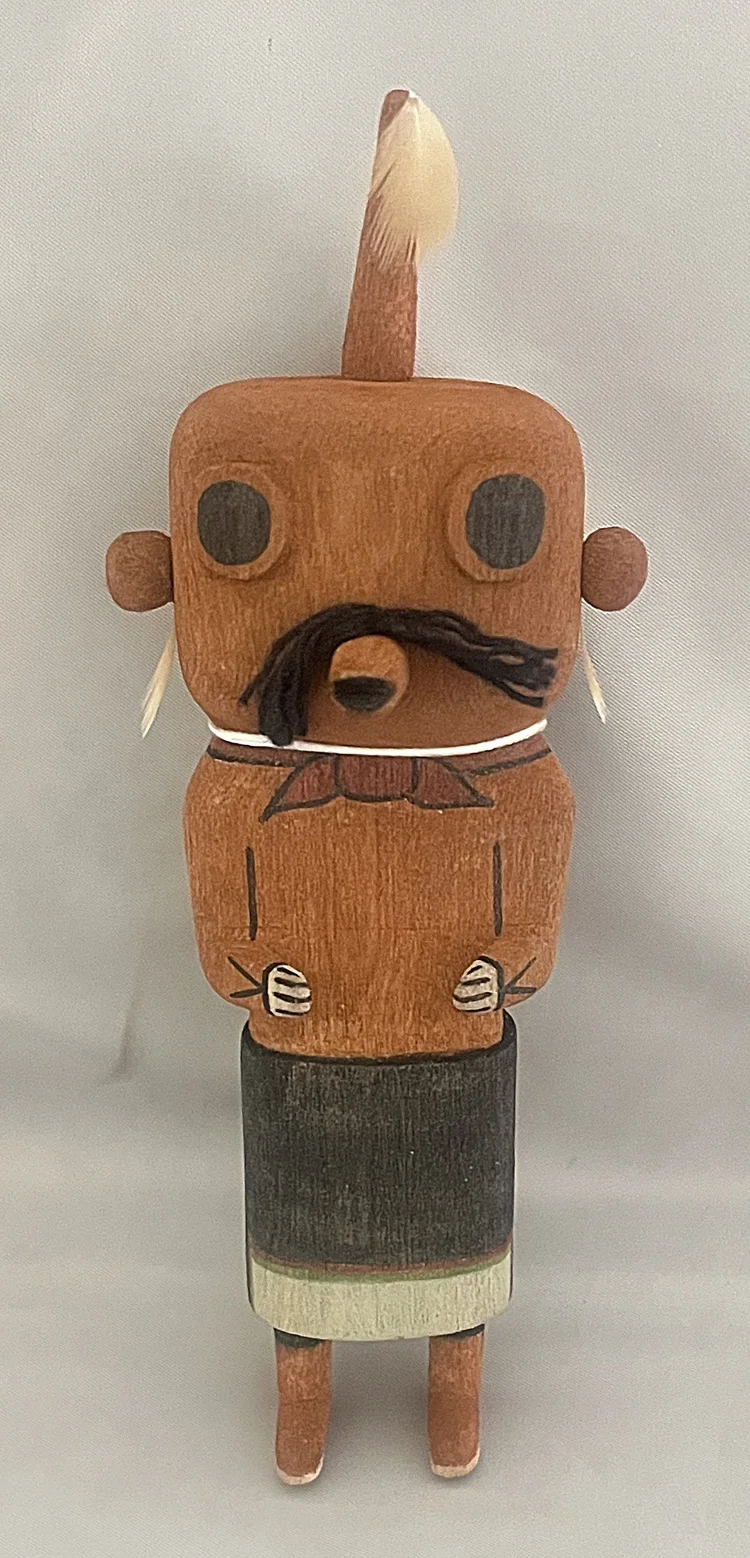
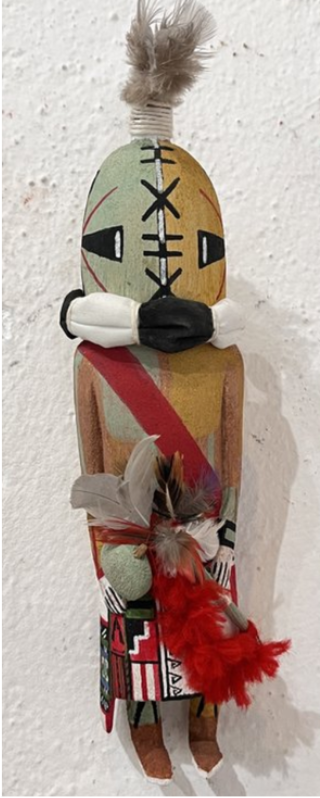
A Laguna hunter by Eric Holmes. 9 inches (not including feathers) $160. The Mudhead is by Kevin Quanimptewa. 7 inches and $200. An Aya or Rattle katsina by Ethan Bryce. 9 inches high to feather tips and $300. (ALL in TUCSON).
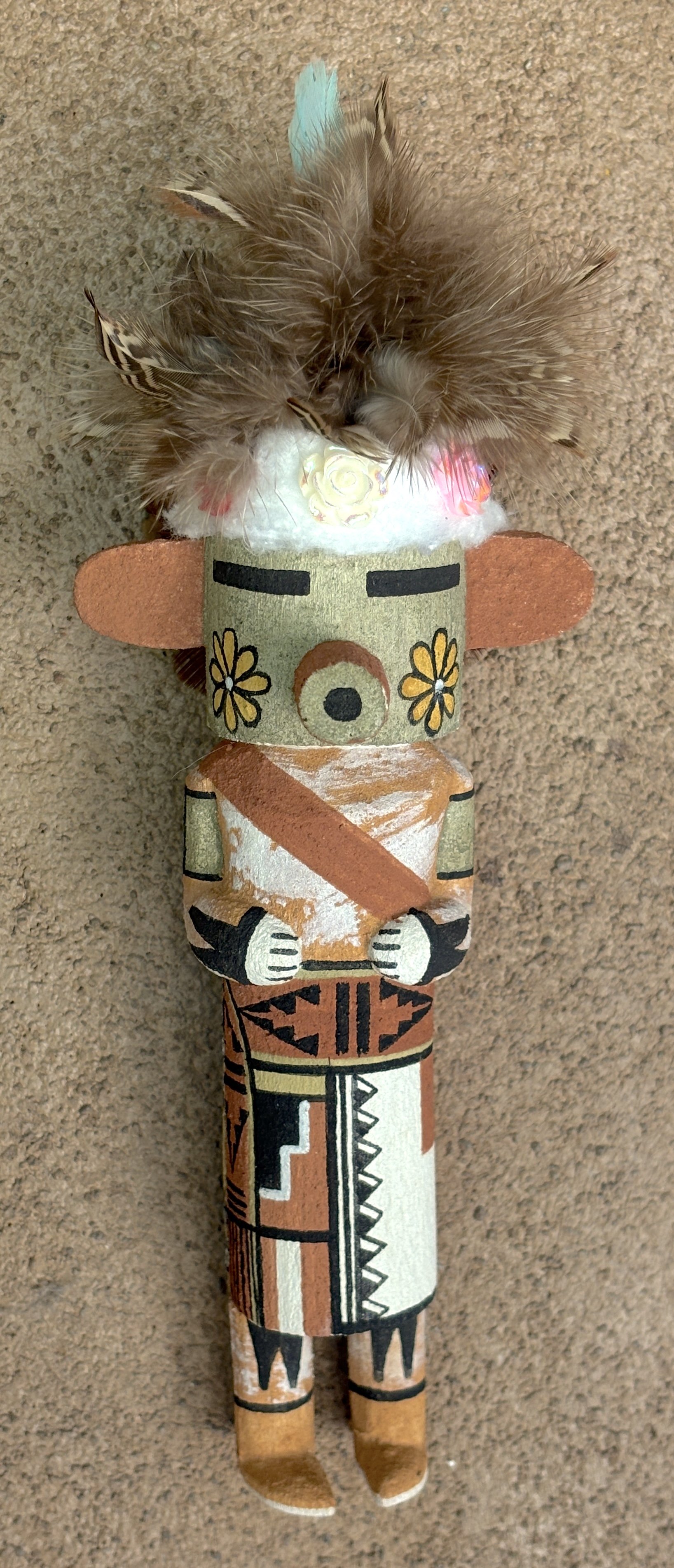
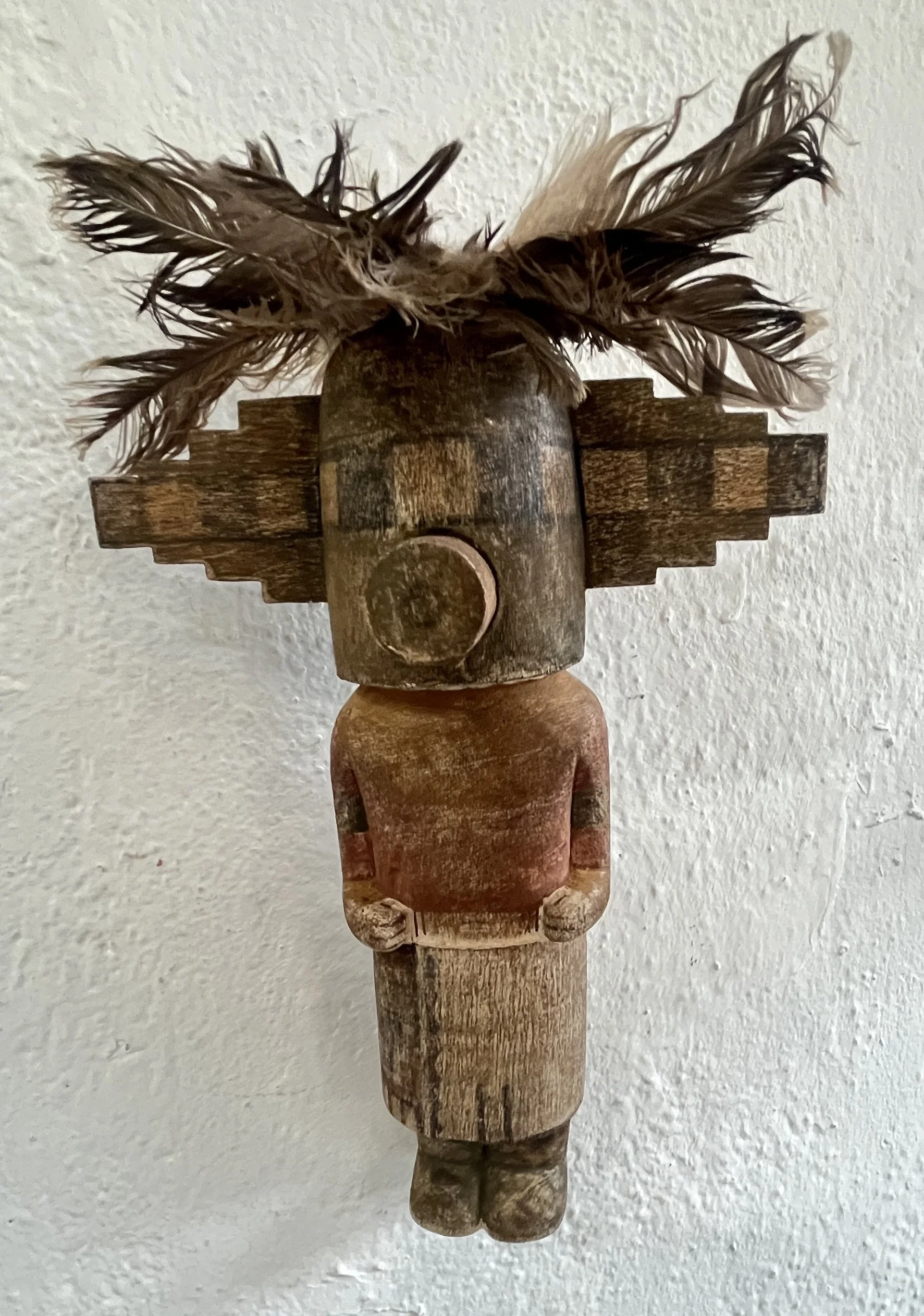
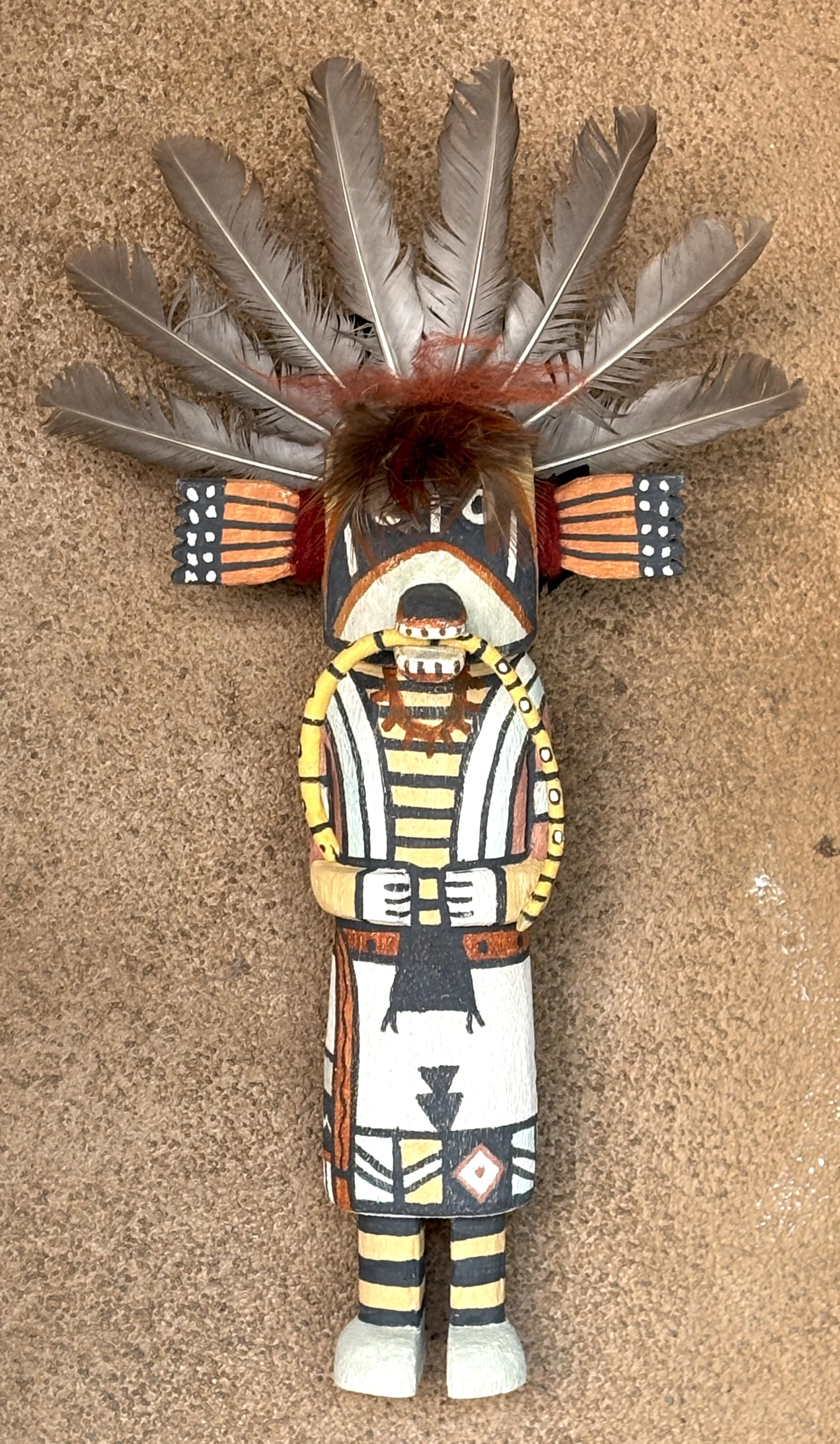
A Navookatsina or Cactus Flower katsina by William Gashweseoma. 8.75 inches high and $200. A Maahkvaho - one of the hunter katsinas, by Tayron Polequaptewa. 10 inches tall and $350 A Tewaquaptewa style doll by Ryon Polequaptewa. This one is 12 3/8 inches high and $750. (ALL in SANTA FE)